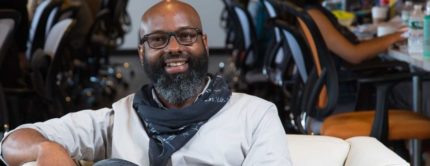
A Black venture capitalist is taking it upon herself to support other “underestimated” Black women founders who see less than 0.2 percent of venture capital funds when trying to get their dream businesses off the ground.
CEO Arlan Hamilton is no stranger to throwing her support behind underrepresented groups and stuck to her trend last weekend when she announced the launch of a $36 million dollar fund aimed at investing in Black women founders like herself. The exciting announcement came during the United State of Women Summit in Los Angeles on May 5.
“.. This has been in the works for several months,” Hamilton, the founder and managing partner of Backstage Capital, told AfroTech. “It had a few iterations, but in the last couple of months, I made the decision that the money would go to funding Black women specifically and $1 million at a time, specifically.”
“It was very intentional and something that … I knew would probably get pushback from some people, but I have the greatest conviction around it,” she continued. “There’s a lot that goes into raising a fund of this size when you have had less than $5 million under management as a new fund manager, but I was up for the challenge.”
The rumors are true. Today at #USOW2018 I announced that my venture capital firm @Backstage_Cap has launched a $36m fund that will invest in Black women founders $1mill at a time. Thank you to the Backstage Crew, headliners, LPs, mentors & network for making this moment possible. pic.twitter.com/yT1SMQOFAR
— Arlan 👊🏾 (@ArlanWasHere) May 5, 2018
They're calling it a "diversity fund." I'm calling it an IT'S ABOUT DAMN TIME fund.
— Arlan 👊🏾 (@ArlanWasHere) May 6, 2018
Like most Black women entrepreneurs, Hamilton built her seed-stage investment fund from the ground up. She spent her days pitching investors across the San Francisco Bay area but was also broke and homeless at the time, often sleeping on the floor of the San Francisco International Airport, according to Quartz. Her ultimate goal was to found a venture capital fund “dedicated to minimizing funding disparities in tech by investing in high-potential founders” who are non-white, women and/or LGBTQ.
By 2018, she had done just that. To date, Backstage Capital has invested in 80 companies across various industries, according to its website. All of the companies have at least one founder who is female, a person or color or member of the LGBTQ community.
Before 2018 ends, Hamilton’s firm plans to invest in two or three companies, the first of which is expected to be announced this summer, AfroTech reported. The entrepreneur said she anticipates funding at least six companies by 2019.
“We are no longer accepting the scraps at the end of the dinner table in venture capital and beyond as Black women,” Hamilton told the news site. “We asked nicely, and now it’s our turn.”
There have been a few bumps in the road, but Hamilton said her persistence wouldn’t let her give up on her dream. Speaking to Quartz, she said she looks for that same relentless persistence when deciding who to invest in.
“I look for founders that remind me of myself,” she said. “Would they have done what I did to get here?”