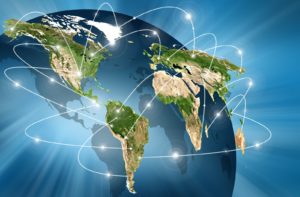
world Map. Best Concept of global business from concepts series.(Elements of this image furnished by NASA)
KIGALI, Rwanda (AP) — African leaders on Wednesday signed what is being called the largest free trade agreement since the creation of the World Trade Organization.
The deal creates a continental market of 1.2 billion people, with a combined gross domestic product of more than $3.4 trillion. A major goal is to boost intra-African trade and rely less on the volatility of commodity prices that affect many exports.
The aim is to have agreement, signed by 44 of the African Union’s 55 member states, enter into force by the end of this year, said the chair of the AU Commission, Moussa Faki Mahamat. States now must ratify the deal.
“Our peoples, our business community and our youth in particular cannot wait any longer to see the lifting of the barriers that divide our continent, hinder its economic takeoff and perpetuate misery, even though Africa is abundantly endowed with wealth,” Mahamat said. He urged strong follow-up to “confound those who, outside Africa, continue to think, with barely concealed condescension, that our decisions will never materialize.”
Concerns remain. The president of Nigeria, one of Africa’s largest economies, skipped the summit amid trade unions’ objections.
And while Africa’s largest economies are expected to benefit most from the deal, some of them worry that more people from poorer countries will migrate their way.
But some of the continent’s strongest and fastest-growing economies, including Ghana and Ethiopia, signed the deal.