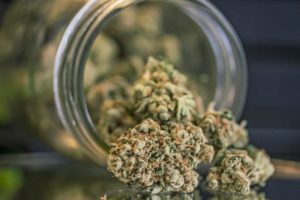
Minority-owned firms will be considered in the second round of bids for Maryland’s new medical marijuana licenses. (Photo by Oksana Smith/Getty Images)
With an increasing number of states bending toward the legalization marijuana, the burgeoning market is slated to balloon into a $31.4 billion dollar industry in just the next few years, according to recent market reports.
Not everyone has had a chance to cash in on the cannabis craze, however, particularly African-American business owners in Maryland who feel they’re purposely being shut out of the lucrative industry via a new bill.
According to the Baltimore Sun, the state has issued 30 medical marijuana licenses in the last two years, only one of which is held by an African-American. The House of Delegates recently announced plans to adopt a new concept that would issue 15 additional licenses, a decision met with much enthusiasm by Black entrepreneurs. For them, the move signaled a “new round of competition that would eliminate the barriers that prevented most Black firms from winning licenses the first time,” the paper stated.
The celebrations didn’t last too long, however, after it was revealed five of the 15 licenses would be set aside for firms who already held one.
“The whole idea of it flies in the face of free competition,” Darryl Hill, a college football star-turned-marijuana entrepreneur, told the Baltimore Sun. “I don’t see the logic in giving [those companies] a license because they already have a license. “Are they the best? I don’t know. Maybe. But they should have to prove it.”
The four companies that could get the new licenses were ranked among the top applicants in the first round of bids, according to the newspaper. Two of the four firms are white-owned, while one is owned by a family of South Asian descent and the last is the sole Black-owned company among growers and processors.
The remaining 11 new licenses will reportedly be open to competitive bidders in a process that favors minority-owned businesses.
Hill and his company, Tilstar, already have a license to sell “Mary Jane” to consumers in a retail setting, the Baltimore Sun reported. However, he was hoping to get a new license to sell the drug wholesale, meaning he could also process and grow marijuana.
The wait may be a little longer than expected.
The bill, which passed the House of Delegates 121-16 last week, will now move to the state Senate for a vote.