(Public Domain)
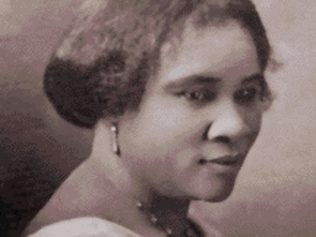
Annie Turnbo-Malone (Aug. 9, 1869 – May 10, 1957)
- Born in Metropolis, Ill., as one of the youngest of 11 children to former enslaved Africans, Turnbo-Malone became a young orphan after her parents died.
- Despite frequent illnesses leading her to miss school and ultimately drop out before completing high school, Turnbo-Malone was a self-taught chemist after being inspired by her herbal doctor aunt.
- During a time when Black women used things like goose fat and scalp-damaging sheep’s carding combs to straighten their hair, Turnbo-Malone developed a chemical product that straightened Black hair sans damage.
- After launching her hair care line in Brooklyn, Ill., she created the “Wonderful Hair Grower.” She also patented the hot comb, which continues to heat-straighten Black women’s hair centuries later.
- She established Poro College, a cosmetology school in St. Louis in 1918. In addition to teaching Black women, it hosted Tumbo-Malone’s businesses and served as space for the Black community to gather.
- Madam C. J. Walker, her employee, would later go on to release her own line of haircare products and become credited as the country’s first female Black millionaire.
- Despite financial setbacks — including a $200,000 divorce settlement and the 1929 stock market crash — Tumbo-Malone remained in business.
- She opened 32 branches of the Poro school throughout the U.S. in the 1950s.
- She became a millionaire by the end of World War I and one of the most successful Black women.
- Using her wealth to give back to the community, she donated to The St. Louis Orphans Home and other Black-focused charities.
- Although she died in 1957, the charitableness she exhibited in her life continued in her legacy. The St. Louis Orphans Home was renamed after her in 1946 as the Annie Malone Children and Family Service Center.