Gaspar Yanga (1545 – Unknown)
- Yanga was an enslaved man on a sugarcane plantation in Veracruz, Mexico, but escaped in 1570 with a group of followers near Córdoba a mountainous region. It’s rumored that he was a prince taken from a royal family of Gabon, Africa.
- In 1871, historian and the mayor of Mexico City Vicente Riva Palacio, proclaimed Yanga a national hero with the title “Primer Libertador de America” or “first liberator of the Americas.” He led one of Mexico’s first successful slave uprisings, helping set forth one of the Americas free Black settlements.
- Yanga kept himself and other enslaved people untouched by Spanish authorities for almost 40 years.
- In 1609 Spanish armies were sent to conquer Yanga and his followers. However, Yanga and his acolyte defeated them. This gave the warriors more confidence and hope to defeat the Spaniards for good.
- Yanga and his crew were known as the cimarrónes. They were associated with the plunder of trade goods alongside the Camino Real or Royal Road(an ancient highway BCE) between Veracruz and Mexico City.
- The Spaniards looked at the cimarrónes as a danger to the colonial system of slavery because of their revolutionary actions against authority and called for the destruction of the band.
- Yanga went on to win more battles against the Spanish but offered to make peace under a few conditions. The most important demand was the freedom of all of Yanga’s warriors prior to 1608 and also the recognition of the settlement as a legal entity which only Yanga’s descendants would govern.
- It took years for the Spanish to negotiate but finally, in 1618 the town of San Lorenzo de Los Negros was officially acknowledged by Spanish officials as a free Black settlement.
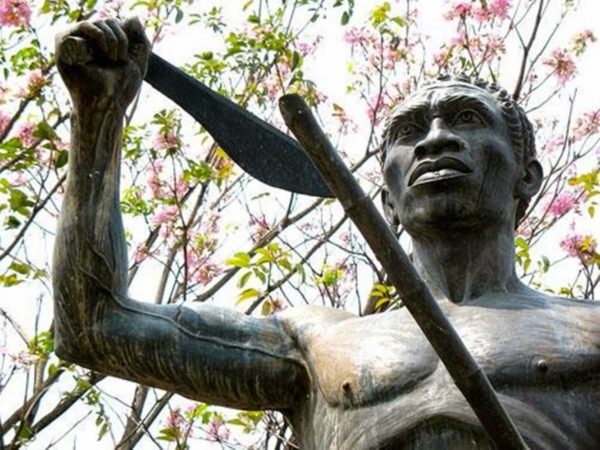
- According to the Wall Street Journal, there’s a statue honoring Yanga in Veracruz, Mexico which exists to this day and was renamed in his honor in 1932.
- The town of San Lorenzo de Cerralvo was later renamed “Yanga” to commerate the leader’s victories. An annual carnival is held every Aug. 10th, celebrating Yanga’s succesful revolution.