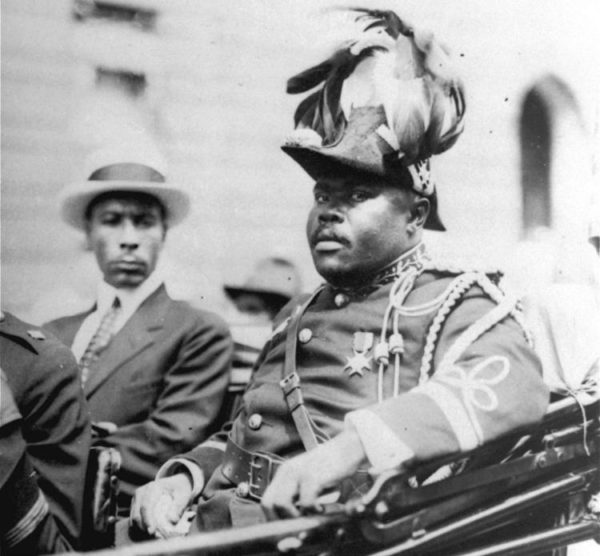
(August 17, 1887 – June 10, 1940)
- Marcus Mosiah Garvey Jr. was born August 17, 1887, in St. Ann’s Bay, Jamaica. Out of 11 siblings, he was the youngest and only he and one of his sisters lived to adulthood.
- Garvey left Jamaica in 1912 to go study and go to college at Birkbeck College in London. He worked for ‘The African Times and Oriental Review’ at the college.
- In 1916, Garvey created the Black Star Line in 1919, a shipping line used to transport goods and passengers between America, the Caribbean and Africa. The shipping line was a major part of the Back-to-Africa movement.
- The Pan-Africanist leader formed the first Universal Negro Improvement Association and African Communities League (UNIA–ACL) division in Harlem, New York. At its height, the UNIA had over one thousand chapters across the world with over 1 million members
- Garvey also had a publication called “The Negro World” which was established in New York City. It was an attempt to convey his message of freedom to Black people.
- During the 1920s, Garvey’s UNIA-ACL, according to historian Lawrence Levine, was “the broadest mass movement” in African-American history.
- Garvey organized several business enterprises. They included the Negro Factories Corporation, a restaurant, a publishing house and a chain of cooperative grocery stores.
- Garvey has become an international symbol for Black freedom. Civil rights leader the Rev. Martin Luther King Jr. called him “the first man, on a mass scale, to give millions of Negroes a sense of dignity and destiny.”
- In 1964, the Jamaican government proclaimed Garvey a national hero and created a shrine in his honor.
- Garvey’s politics and beliefs lived on through several African leaders in post-colonial Africa. Leaders like Kwame Nkrumah of Ghana and Jomo Kenyatta of Kenya credit Garvey for influencing their country’s political framework.