
Solange thanked festivals for keeping her autonomic disorder a secret. (Photo by Rich Fury/Invision/AP, File)
Solange has revealed she won’t be performing at Afropunk after quietly battling an autonomic nerve disorder. The “Don’t Touch My Hair” singer revealed the news on Instagram Wednesday, Dec. 27 and although she was upset that she couldn’t perform at the pro-Black festival in South Africa on New Year’s Eve, she declared she needed to put her health first.
“[It’s] been a journey that hasn’t been easy on me,” she wrote. “Sometimes I feel cool, and other times not so cool at all. It’s a complicated diagnosis, and I’m still learning so much myself, but right now, my doctors are not clearing me for such an extended lengthy flight and doing a rigorous show right after.”
“As a part of the self-care that I’ve tried to encourage this past year, it needs to start with myself, and I’m looking forward to doing a better job of this 2018,” she added.”
https://www.instagram.com/p/BdNmg26BVcI/?taken-by=saintrecords
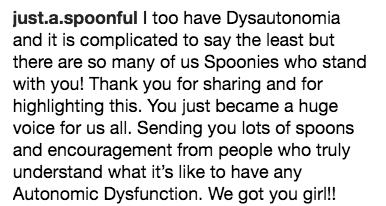
Solange’s transparency was welcomed by fans.




But her disclosure also begs the question: what exactly is an autonomic nerve disorder?
Solange News
UK Paper Apologizes for Airbrushing Out Solange Knowles’s Braids
Solange, Bruno Mars Lead Soul Train Awards Nominations
Mama Knows Best: Beyoncé and Solange Get Their Confidence — and Their Pro-Blackness — from Ms. Tina
There are different kinds of autonomic disorders, also known as dysautonomia, and Solange has not disclosed which kind she is treating. But they all have to do with parts of the nervous system that you don’t have to think about for them to work, including heart rate, perspiration, breathing, and body temperature, according to Mayo Clinic.
Symptoms can range from fatigue and lightheadedness to issues with sweating and bowel function, according to Black Doctor. The disorder can be brought on by other diseases — like diabetes — and treatment typically includes prescribed medication to regulate blood pressure and increase salt and water retention in the body.