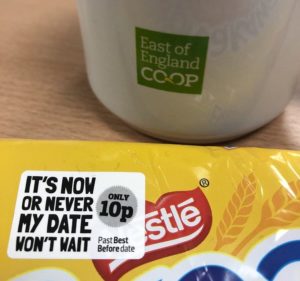
The East of England Co-op is he first retailer to begin selling food items beyond their “Sell By” dates. (Image courtesy of Twitter/@EoECoop)
“It’s not nice to get dumped,” according to a U.K. grocery store chain hoping to sell shoppers on the idea of buying foods that have passed their “Best by” dates.
In an effort to significantly slash food waste in its stores, the East of England Co-op said it’s now selling canned and packaged goods up to a month past the “Sell By” dates in its 125 locations for just 10 pence (about 13 cents), NPR reported. The grocery chain launched its “Co-op Guide to Dating” campaign earlier this month, enticing shoppers with slogans like “Don’t be a binner, have it for dinner!”
The move comes on the heels of a successful three-month trial in 14 of the co-op’s stores, according the grocer’s website, during which items flew off the shelves just hours after the prices were reduced.
“The vast majority of our customers understand they are fine to eat and appreciate the opportunity to make a significant saving on some of their favorite products,” said Roger Grosvenor, Joint Chief Executive at the Co-op, in a statement.
“This is not a money making exercise, but a sensible move to reduce food waste and keep edible food in the food chain,” Grosvenor added. “By selling perfectly edible food, we can save 50,000 items every year which would otherwise have gone to waste.”
The Food Standards Agency estimates that the U.K. trashes nearly 7 million tons of food and drinks each year, the majority of which was still edible. Such wastefulness costs the average U.K. household 470 pounds a year (about $630 U.S. dollars).
But are foods really safe to eat past their expiration date? NPR foodie expert Dan Charles says yes, as foods technically don’t “expire.”
“Most foods are safe to eat even after that ‘sell by’ date has passed,” Charles explained in a 2012 article. “They just may not taste as good, because they’re not as fresh anymore.”
“Companies use the labels to protect the reputation of their products [because] they want consumers to see and consume their food in as fresh a state as possible,” he added. “But those dates often have the perverse effect of convincing over-cautious consumers to throw perfectly good food into the trash.”
Earlier this year, grocers in the U.S. launched an effort to cut food waste caused by misleading”Best By” labels, according to NPR. That effort included encouraging food companies to use just two phrases: “Best If Used By” for items that may not taste as fresh over time but are still safe to consume, and “Use By” for highly perishable goods like seafood and dairy that can become unsafe to eat.
The co-op also said it will now closely monitor waste levels from each of its stores so that it can remove or reduce product lines that cause excessive waste.
The downside? The unpurchased discounted items can’t be donated to food pantries, as they do not accept goods that are past the “Best By” date.


