University of Chicago Unveils Statue Honoring Trailblazing Black Female Scholar


The University of Chicago unveiled a bronze statue Monday, Nov. 27, honoring an African- American scholar who left her mark at the prestigious university once dominated by white males.

The story of Georgiana Rose Simpson, the first Black female to receive a doctorate degree from U of C, was brought to life after senior students Asya Akca and Shae Omonijo met as roommates their freshman year of college, CBS Chicago reported. Acka and Omonijo, both political science majors, were led to Simpson’s story by their own interest to discover their voices as young women.

Simpson arrived at the university in 1907 after teaching in her hometown of Washington, D.C. for a few years. Her presence at the campus dormitory caused quite the commotion because she was Black, and she was eventually ordered to move off campus. She earned her master’s degree in 1920 and her doctorate in 1921 at 55-years-old.

Simpson went on to author articles for W.E.B DuBois’ publications and retired after teaching German as a professor at Howard University, according to AP.

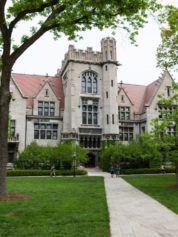
It took nearly three years to raise the $50,000 needed for the bronze bust honoring the late scholar. Her likeness now sits in the Reynolds Club, a campus area once reserved for white men only, directly across from a bronze relief of Harry Pratt Judson, the university president who forced her to move off campus.

“She’s looking onward, her chin is up high,” Omonijo told CBS Chicago of the statue. “She’s smiling and grinning a little bit.”

Democracy needs journalism it can trust.

This election season, the stakes are higher than usual — and so is the pressure on newsrooms to soften their coverage, stay quiet, or just disappear. Independent reporting, the kind that answers to readers instead of advertisers or political pressure, matters more in a moment like this, not less.

For over 14 years, Atlanta Black Star has stayed independent and reader-funded. We have no corporate owner and no shareholders telling us what to cover or how to cover it. That independence is also our biggest vulnerability: nothing protects it except readers choosing to fund it directly.

Newspaper ad revenue has fallen more than 80% since 2005, and local newsrooms are closing at a rate of roughly two a week nationwide. When outlets go under in a moment like this, it's rarely the independent, reader-funded ones that get to stick around.

We know a request for support isn't why you came here. But without readers choosing to fund this work directly, the depth of reporting we can do at home and abroad shrinks along with everyone else's. If you're not in a position to give, that doesn't change how much we value you as a reader.

If you are able to, a recurring contribution does more for us than a single one-time gift, because it lets us plan the next investigation instead of just the next invoice. It takes about 30 seconds, no long form, no account. Thank you for continuing to support independent journalism and freedom of the press.

Back to top