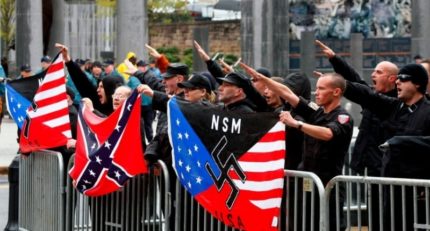
A group of white nationalists marched through the University of Virginia campus on August 11. (Photo by Getty Images)
This summer’s violent white nationalist rally in Charlottesville, Va. has seemingly had a chilling effect on Black student enrollment at the University of Virginia.
The number of Black high school students who applied for early action is a tad bit lower than it was last year, U.Va. dean of admissions Greg Roberts told local paper, The Daily Progress. Early action essentially grants prospective students rapid acceptance from the university.
“It’s the only group that’s lower,” Roberts said. “The events in August are certainly on people’s minds.”
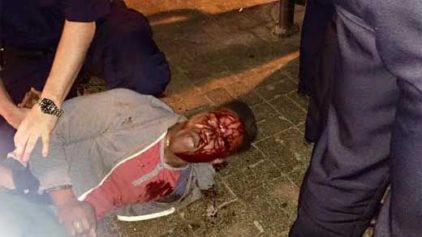
On Aug. 11, a group of white nationalists, Neo-Nazis and KKK sympathizers descended on the college campus carrying TIKI torches and spewing racist hate. The rally continued the following day but soon turned violent as rally-goers clashed with counter-protesters in the streets. A woman was ultimately killed after a Neo-Nazi plowed his vehicle into a group of counter-protesters.
Admission decisions for early-action applicants are usually made in January while decisions on regular applications are made in March, according to the newspaper. Students have until May 1 to accept their offer, meaning that this fall’s incoming class of first-time students had already committed to U.Va. before the deadly Charlottesville protests. The events still may have put a damper on the admittance of Black students, however.
Data from the university showed that of the nearly 4,000 first-time students enrolled in August, the majority were white and from in-state. U.Va. enrolled 344 African-American first–year students that same month, or about 9 percent of the incoming class. This was roughly equivalent to the percentage of Black first-year students in 2016, the newspaper reported.
While fewer offers were made to African-American students in spring 2017, those students accepted their offers at an increased rate.
All in all, it was record year for the number of early-action applications, according to Roberts, who said the university received 21,400 early-action applications this fall, a 5 percent jump from last year. The number of international, Latino and Asian students who applied for early action also increased from last fall.