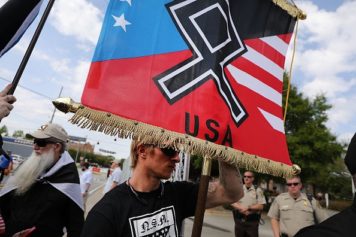
Alt-right leader Richard Spencer claimed slavery was beneficial to Black folk, yet he wasn’t able to hold his argument too well when challenged by a fiery Black journalist from Britain.
Gary Younge, editor-at-large for U.K. newspaper “The Guardian,” interviewed Spencer this summer for the new documentary “Angry, White and American,” scheduled to air Thursday, Nov. 9, on Britain’s Channel 4 News. From the get-go, Younge voiced his reservations about speaking with the self-avowed white supremacist, saying he believes the term “alt-right” is just “a new word for fascism.”
“Ordinarily, giving someone like that oxygen is something I think journalists shouldn’t do,” he explained. “But here’s the difference: Spencer and people like him credit themselves with providing the intellectual underpinnings for the Trump revolution. And I fear they might be right.”
Spencer was visibly alarmed by the fact that his interviewer was a Black man, but still decided to push the argument that “Africans have benefited from their experience with white supremacy.” So, Younge pressed him further, asking, “So [you think] slavery was good for them?”
“Look, they benefited from being in a different nation than their own. No doubt,” Spencer replied, with several of his suit-wearing white nationalist cronies in the background. “How can you deny that?”
Younge strongly disagreed, calling the white supremacist’s ideas “ridiculous.”
On a personal journey across white America, writer Gary Younge came face to face with alt-right leader Richard Spencer @Channel4 Thurs 10pm pic.twitter.com/25f0gHWmjO
— Channel 4 News (@Channel4News) November 7, 2017
In an op-ed for The Guardian, the journalist reflected on why he felt interviewing Spencer was worth the risk. He said his motive was primarily journalistic, as he sought to “unearth the roots of white anxiety” in the U.S. and how it’s affecting the nation’s politics. However, he admitted his encounter with Spencer wasn’t what he and his team had expected.
“From what we had seen before, he would appear charming and reasonable while giving his egregious and offensive views an intellectual gloss,” Young wrote. ” … What we didn’t expect was that he would be ignorant, historically illiterate, incoherent and personally insulting.”
That wasn’t the worst of the interview, however, which occurred just three weeks before a group of violent white nationalists, led by Spencer, descended on Charlottesville, Va. and wreaked havoc.
In a back and forth with Younge, the alt-right leader contended that Britain wasn’t the journalist’s “real” home because his African ancestors didn’t build it.
“My ancestors built it tenfold,” Younge retorted. “And weren’t paid for it!”
Spencer then quipped that Younge’s argument was like saying “like saying African-Americans built the United States.”
“They did!” Younge yelled back in frustration. “They literally built the White House.”
Spencer eventually conceded that slavery had its consequences, but said he was ultimately “proud of it” and he “embraced it.”
Younge cut the interview short not long after that.