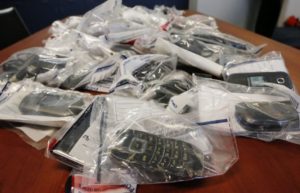
cell phones confiscated in prisons are displayed during a news conference in Atlanta. (Bob Andres/Atlanta Journal-Constitution via AP, File)
COLUMBIA, S.C. (AP) — The chairman of the Federal Communications Commission said he’s willing to work with corrections officials, telecom companies and the FBI to combat cellphones in the nation’s prisons.
In a letter obtained Thursday by The Associated Press, FCC Chairman Ajit Pai wrote to U.S. Rep. David Kustoff of Tennessee, telling him that he’ll try to arrange a meeting among those groups within 120 days and report its progress to Congress, fulfilling a request
“I share your concerns about the proliferation of contraband wireless devices in prisons and the potentially devastating implications for public safety,” Pai wrote in the letter, dated Tuesday. “We continue our efforts to push for even better procedures and solutions for this very serious problem.”
Pai was responding to a letter sent earlier this month by Kustoff and dozens of other House members and U.S. senators. In it, they wrote that addressing the security threat posed by contraband cell phones is “an issue of critical importance” and called on the FCC to bring together the different groups for a discussion, giving a deadline for resolving how best to prevent prisoners from using contraband phones behind bars.
Inmates use the phones, the members of Congress wrote, to continue the violent crimes and gang activity that landed them behind bars in the first place. The signees, which include both of South Carolina’s U.S. senators and all of its Republican House members, asked the FCC to set up a meeting with state prison officials, cellphone companies and the FBI within 120 days, and to report back to Congress on their progress.
Noting that some on Capitol Hill would like to fix the issue by congressional mandate, the members wrote they would prefer a more “collaborative approach.”
The interaction follows letters by a top official with the U.S. Department of Justice and South Carolina Corrections Director Bryan Stirling describing the dangers posed by inmates’ unfettered ability to communicate via cellphones.
Earlier this year, Stirling, a leading voice on the need to eradicate the phones from prisons, wrote to Attorney General Jeff Sessions, beseeching the top prosecutor for help pursuing FCC permission to jam cell signals.
South Carolina Gov. Henry McMaster also lobbied, writing a memo to Sessions in August on the dangers of prison cellphones and thanking him for any help he could provide. Assistant Attorney General Beth Williams also weighed in, telling FCC officials that addressing the security threat posed “should be a chief priority” of both the FCC and Justice, which oversees the federal Bureau of Prisons. U.S. Rep. Mark Sanford has also called for action.
Stirling and others in his position say the phones — thrown over fences, smuggled by employees, even delivered by drone — present the biggest threat to prison security. A decades-old law says federal officials can grant permission to jam the public airwaves only to federal agencies, not state or local ones. Telecommunications companies are opposed, saying jamming cell signals could set a bad precedent and interfere with legal cell users nearby.
Pai has signaled willingness to work on the issue, a stance he reiterated in his letter to Kustoff. In March, after Pai took testimony from Stirling and a former South Carolina corrections officer who was nearly killed in an assassination attempt orchestrated by an inmate using an illegal phone, commissioners voted 3-0 to approve rules to streamline the process for using technology to detect and block contraband phones in prisons and jails across the country.