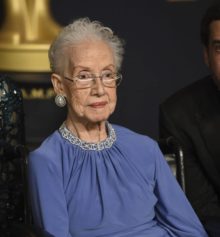
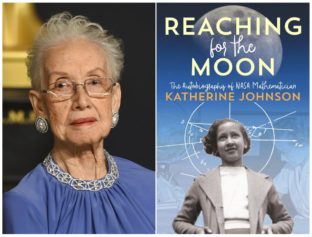
NASA is honoring one of history’s little-celebrated heroes with a facility named after her. Katherine Johnson, one of the women whose story came to prominence in the Oscar-nominated film, “Hidden Figures,” receives her well-deserved time in the spotlight. However, the 99-year-old mathematician said she thought the agency was “crazy” for naming the new building the Katherine G. Johnson Computational Research Facility.
The $23 million, state-of-the-art space, dedicated Friday, Sept. 22 as part of NASA’s Langley Research Center in Hampton, Va., boast powerful computers that can conduct complex analyses and simulations. In some cases, the processors can complement and even replace work done by NASA wind tunnels.
“I always like something new,” Johnson said of the CRF in a press release. “It gives credit to everybody who helped.”
Katherine Johnson’s Rise to Fame
‘Hidden Figures’ Gets Early Release Date, Set for Christmas Day to Qualify for Oscars
But Johnson went decades without receiving any credit for her remarkable work. She is responsible for confirming the electronic calculations of John Glenn’s successful 1962 launch to orbit.
“If she says they’re good,” Johnson, in a press release, recalled Glenn saying, “Then I’m ready to go.”
Johnson was one of three Black women who calculated trajectories for famed astronauts like Glenn, and Neil Armstrong, to travel into space. Mary Jackson and Dorothy Vaughan were the other two, who also got their shine in “Hidden Figures.”
“We are living in a present that they willed into existence with their pencils, their slide rules, their mechanical calculating machines,” said “Hidden Figures author Margot Lee Shetterly at the ceremony, “and, of course, their brilliant minds.”
“I like the stars and the stories we were telling, and it was a joy to contribute to the literature that was going to come out,” Johnson said. “But little did I think it would go this far.”