Oscar-winning director Kathryn Bigelow is aware of the conversation that’s happening about her helming a film about Black history in the late 1960s.
As a white filmmaker, she says she know’s she’s not the best fit to direct “Detroit,” which chronicles the civil and lawful unrest that emerged in the city in 1967, which included three Black men being killed by white police officers at the Algiers Motel.
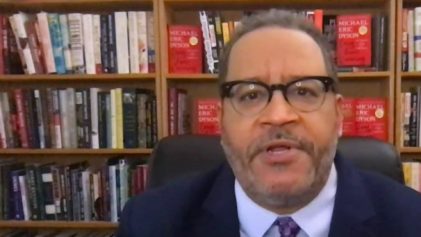
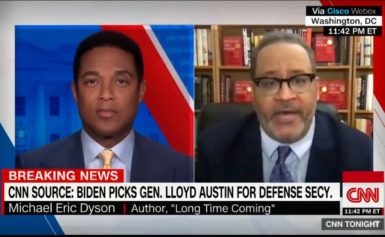
“Am I the ideal person to direct this movie? No,” Bigelow tells Dr. Michael Eric Dyson, a Georgetown University sociology professor, in the August 2017 issue of Elle magazine. “Having lived with a certain amount of privilege, how can I truly, truly get into the DNA of somebody who has experienced social injustice?
“Is this a story that needs to be told? Yes. And so I felt like, well, let’s just add more noise to the conversation and, hopefully, there will be many more movies.”
Criticism about a white woman directing a film that largely focuses on the experience of young Black men has emerged online ahead of the Aug. 4 release of “Detroit.”
Looks good but once again it’s events from our stories being told by a white woman. Can’t support this.
— Sunshine Jenkins 🐘 (@HipsterNerdist) June 19, 2017
The movie Detroit is really written, produced, and directed by a white woman 🤦🏾♀️
— ✧ (@fakexgf) July 22, 2017
That "Detroit" movie is directed by a white woman. No wonder it's no Black women in it 😂😂😂
— a princess diana stan account (@seabethree) July 7, 2017
Yea this Detroit movie looks like all sorts of trash. Looks exactly like a white woman made it
— insert witty phrase here (@SoWhyMaleModels) May 5, 2017
Dyson also got feedback from cultural critic Jamilah Lemieux, former Ebony magazine senior editor and current vice president of news and men’s programming at Interactive One.
“I’ll admit that I’m automatically skeptical when a white woman is tasked with a story that depicts Black life, particularly as it relates to how Black women are portrayed,” Lemieux said. “What might her lens be? Does she have even a limited understanding of the complicated politics of interracial dating from our side? Will she rely on the comfortable tropes so often employed by her male counterparts — hell, by Black men?”
Bigelow said she knew she had to direct this story when, shortly after Michael Brown was killed by a cop in Ferguson, Mo., in 2014, writer and producer Mark Boal pitched the story of the Algiers Motel incident.
“It crystallized the need to add, from my vantage point, more volume to that conversation. Because it’s a conversation that I believe needs to be had,” Bigelow said.