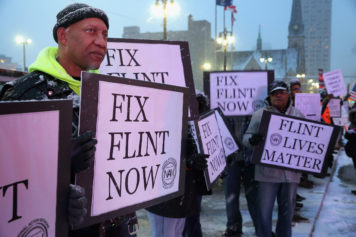
Beyoncé’s previous clean-water effort aided Flint, Mich. (AP Photo /Andrew Harnik, File)
Beyoncé’s pledge to help the country of Burundi get clean water is raising concern for some due to unanswered questions over how the superstar plans to actually make it happen.
Details about precisely how much Beyoncé plans to donate to Burundi, her ties to the country and how she’ll benefit from the effort are questions NPR has been unable to get satisfactory answers to.
Parkwood Entertainment, which deals with the singer’s publicity, did not respond to the publication’s questions regarding Beyoncé’s donation — and that raised a red flag for Solome Lemma, deputy director of the nonprofit Thousand Currents.
“I know some funders like to be private about their financial giving,” Lemma, whose organization funds grassroots organizations, told NPR. “But given the public nature of this, I would be curious to know what it is.”
In order to improve conditions in the landlocked East African country, Beyoncé’s philanthropic arm, BeyGOOD, and UNICEF have joined forces to provide hygiene education, construct hand pump-equipped wells and create improved water and sanitation facilities in schools in four prioritized regions.
“Access to water is a fundamental right,” Beyoncé said in a June 30 press release announcing the multi-year partnership. “When you give children clean and safe water, you don’t just give them life, you give them health, an education and a brighter future. I am committed to helping drive lasting solutions to the water crisis in Burundi.”
Though more details are to be announced on World Children’s Day on November 20, questions surrounding the current plan are presently looming.
Beyoncé hasn’t been quiet about her giving in the past, as when she announced $80,000 was raised to provide clean water to Flint, Mich., residents in June 2016.
And similarly to her Flint efforts, she’s also using her fanbase to help Burundi by selling “BeyGood4Burundi” T-shirts in two different designs for $30 each, the proceeds of which will benefit the country that has been dealing with violence for years. While fans also can donate directly to the cause, it isn’t clear how much of the T-shirt proceeds will go to Burundi.
However, John Trybus, Georgetown University professor and managing director of the school’s Center for Social Impact Communication, told NPR the giving opportunities are “rather limited.”
“That’s a big miss,” he said. “A lot of the research on supporting causes shows that you need to give people different options to be involved.”
Beyoncé’s personal ties to the country also are unknown, although UNICEF USA’s president and CEO Caryl Stern told NPR the “Formation” singer learned about Burundi when she saw a news program about it. Ivy McGregor, Parkwood’s director of philanthropy and corporate relations, visited Burundi earlier this year and made note of the number of women who travel miles to get water for their families in the UNICEF press release.
Finally, there is the issue of how Beyoncé’s brand benefits from charity, as the BeyGood4Burundi tees are sold on the same merchandise page as her “Lemonade” apparel. Trybus believes “it would be best not to muddy the waters” by having philanthropy intersect the star’s professional branding.