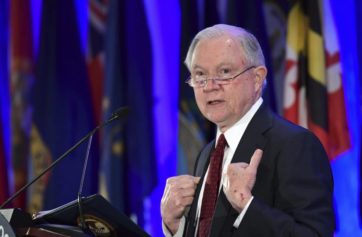
Attorney General Jeff Sessions has criticized the Obama administration for being soft on crime. (Photo by Gage Skidmore.)
Attorney General Jeff Sessions is currently considering policy changes that would strengthen the rules on prosecuting drug crimes, officials familiar with the matter say, reversing Obama-era policies that eliminated harsh penalties for low-level drug offenses.
If implemented, the new polices would void a memo by former Attorney General Eric Holder that directed prosecutors to refrain from charging low-level defendants with drug crimes that would prompt mandatory minimum sentences, The Washington Post reported. Only offenders who met certain criteria, such as not belonging to a gang or large-scale drug trafficking ring, were eligible for the lesser charges under Holder’s directive.
“We must ensure that our most severe mandatory minimum sentences are reserved for serious, high-level or violent drug traffickers,” the former attorney general wrote in 2013. “Too many Americans go to too many prisons for far too long and for truly no good law enforcement reason.”
Sessions is looking to upend all of that, however, signaling a significant effort by the Trump administration to revamp some of the harshest polices instituted during the “war on drugs.” The attorney general has often criticized the Obama administration, particularly the Justice Department, which he chided being too soft on crime.
“As the Attorney General has consistently said, we are reviewing all Department of Justice policies to focus on keeping Americans safe and will be issuing further guidance and support to our prosecutors executing this priority — including an updated memorandum on charging for all criminal cases,” department spokesman Ian Prior told The Washington Post.
Among other changes, Sessions is reportedly weighing whether to have his prosecutors bring the harshest of penalties against drug traffickers, whether they’re low-level offenders or not, the unnamed officials said. The former Alabama senator may also allow prosecutors to tack on more “enhancements,” which essentially make prison sentences longer. Unlike Sessions, former AG Holder urged his prosecutors to avoid using enhancements, except in certain cases, such as when an offender was involved in or threatened to use violence.
Sessions’ proposed polices have left some justice advocates worried, while others have questioned if the changes will have much of an impact on drug sentencing at all.
University of Michigan law professor Sonja B. Starr argued that even if Sessions was to return to the draconian drug policies, there still might not be significant changes in how prosecutors handle such cases.
“There’s still a lot of discretion left to prosecutors to determine what is readily provable,” Starr told The New York Times. “Under any regime, whatever the Department of Justice policy, the choice is made by individual prosecutors.”
A draft of the attorney general’s policies is currently under review.