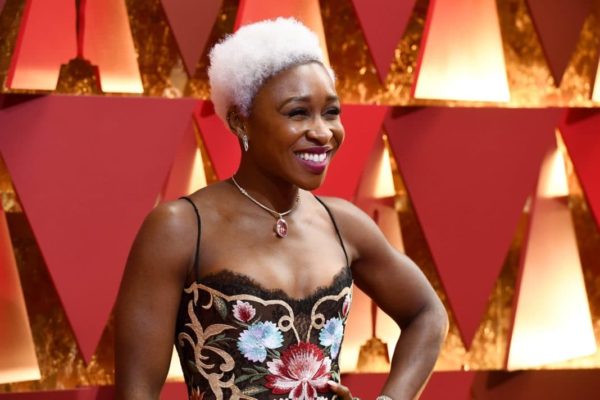
Cynthia Erivo will star in a Harriet Tubman biopic. (Kevork Djansezian/Getty Images)
Cynthia Erivo has something to say to anyone who thinks her white hair is meant to downplay her Blackness.
“Some people like it, some people hate it,” Erivo told Essence in a recent interview. “I don’t care either way.”
Erivo, who recently wrapped a stint on Broadway in “The Color Purple,” has faced criticism over her white hairstyles, which she has worn as a blunt bowl cut or styled into finger waves.
https://twitter.com/MsCultureKeeper/status/830998113766690816
@CynthiaEriVo Not being shady, You are a phenomenal talent. No doubt. But the blonde hair just ain't working. Drop it.
— Caleb Clayton Cohen (@claybryce) February 13, 2017
I love Cynthia Erivo like cooked food I really do but I always hate her hair😩😔
— 🍯Syn (@IAmT_Synquist) February 27, 2017
“I did it because I really wanted people to see my face,”Erivo continued. “The thing about me and having dark hair is I felt like I was hiding and the white hair feels like a light bulb. You can’t miss me. I just stopped being afraid of my face. My hair was really long and I just want to spend less time doing it and have you see my face. Never want to hide behind hair. It’s fun and easy to dress.”
Erivo also has confronted naysayers who claim Black people dyeing their hair blonde are attempting to run from their culture.
@CynthiaEriVo please stop appropriating European culture, blonde is not your look sweetie.
— decentguy (@deepinthotz) January 14, 2017
https://twitter.com/CynthiaEriVo/status/820311215914287106
“I’ll tell them to look at Aborigines in Australia who have beautiful, naturally blonde hair,” Erivo said. “I’ll tell them to look at my cousin who is a redhead. And I’ll tell them that hair color isn’t pigment.
“And what about the white women who go and get a Jheri curl and dye their hair black? Hair dye is hair dye. My hair still grows in black at the root and I don’t run to the hairdresser when it happens,” she added. “I don’t feel like me having blonde hair stops me from wanting to encourage Black women.
“I’m very happy being Black. It’s something I’m very proud of, and specifically being Nigerian, I couldn’t run away from it if I tried.”