
McDonald’s and KFC were named in a new chemical study about the harmful chemicals in fast-food packaging. Pizza Hut was not mentioned. (Wikipedia)
A new study has revealed that there are staggering levels of chemicals found in food packaging, primarily those used at fast food restaurants.
The report, published Wednesday, Feb. 1, in the Environmental Science & Technology Letters, found synthetic fluorinated chemicals in grease-resistant burger and dessert wrappers, as well as paperboard containers. Known as PFASs, researchers at various universities and federal agencies have voiced concern over the substance, which can leach into food and also is found in clothing and furniture. Consuming the chemical can result in adverse health effects like cancer, obesity and immune suppression. PFASs began being phased out by many American manufacturers in 2000 for that reason. The Food and Drug Administration has approved over 90 types of PFASs to use in food containers. However, researchers worry that not enough testing has been done, especially when the more harmful long-chain versions, which contain carbon atoms, make contact with food products.
The study reviewed about 400 samples of food wrappers and containers, including paperboards — like french fry containers — wrappers and beverage containers from 27 chains. Of the 27, 21 restaurants, including McDonald’s and KFC, contained the chemical. Researchers found dessert and bread wrappers had the most fluoride with 56 percent, sandwich and burger wrappers had 38 percent and paperboard had 20 percent, though none were found in paper cups. Analysts also looked over 20 containers to determine the specific kind of PFASs they had and found six contained those removed from the market 17 years ago.
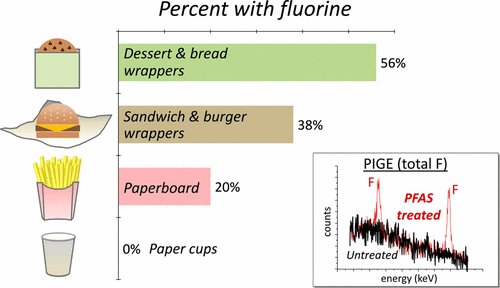
Two unidentified fast-food chains reviewed in the study responded to the findings and denied their packaging contained PFASs, but researchers saw “a substantial portion” of the chemical in the food packaging.
A statement issued by chemical organization FluoroCouncil said there was not enough data to draw clear-cut conclusions about the study’s findings. It also pointed to short-chain PFASs that have been approved for fast-food packaging.
“It is important to note, however, that the major manufacturers of fluorinated chemistries in the U.S., EU and Japan have stopped manufacturing the older, long-chain fluorinated chemistries, such as PFOA and PFOS, which have been the chemicals of concern to regulators,” it said. “There are now specific, modern, short-chain PFAS chemicals that have been carefully reviewed and approved for use in coating food-contact papers to keep grease, oil and moisture from seeping through the packaging. So, to find these chemistries in these products is neither surprising nor alarming, as long as they are approved for use by the U.S. Food and Drug Administration.”
Arlene Blum, a researcher from the Green Science Policy Institute and the University of California, Berkeley, told FairWarning that short-term versions also are concerning.
“Most of the replacements have not been well-studied and probably will never be adequately studied because there are so many of them,” she said. “The replacements share the property of not ever breaking down in the environment.”