Some countries are developing laws on food donations and ways to minimize food losses and waste. Photo: FAO/Rhodri Jones
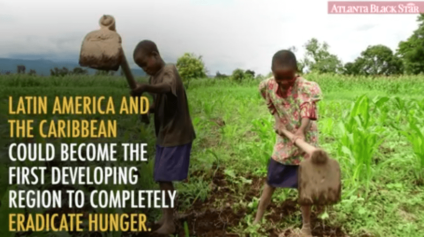
With continued and strengthened implementation of a regional food security plan, Latin America and the Caribbean could become the first developing region to completely eradicate hunger, the head of United Nations agricultural agency said.
“This region has all the necessary conditions to achieve this, starting with the great political commitment that sustains the Community of Latin American and Caribbean States (CELAC) Food Security, Nutrition and Hunger Eradication Plan,” Director-General of the UN Food and Agricultural Organization José Graziano da Silva said Wednesday, Jan. 25.
Speaking at the Summit of Presidents and Heads of State and Government of CELAC in Punta Cana, the Dominican Republic, the FAO chief added: “The plan represents the crystallization of governments’ political will to eradicate hunger before 2025 [five years ahead of the target set in the Sustainable Development Goals].”
Approved by CELAC in 2015, the plan promotes comprehensive public policies to reduce poverty, improve rural conditions, adapt agriculture to climate change, end food waste and mitigate disaster risks. A key element of the plan is that it not only focuses on addressing hunger but also obesity, which affects about 140 million people in the region.
According to the FAO, the plan also is fully in line with global commitments, including the Paris Agreement on climate change and the Sustainable Development Goals (SDGs).
Strengthening family farming to tackle climate change
Mr. Graziano da Silva also highlighted the threats posed by climate change, which has the potential to reverse the gains made in the fight against hunger and extreme poverty in the region.
“Agriculture is the sector most affected by climate change and its main victims are small family farmers, men and women, many of whom struggle daily for their survival,” he noted.
Together with CELAC, FAO is developing a plan of action for family agriculture and rural territorial development that promotes sustainable intensification of production, public procurement and food supply systems, rural services and greater opportunities for rural youth.
FAO also has supported the countries of the region to draw up a Regional Strategy for Disaster Risk Management for Agriculture and Food Security, which promotes resilience and adaptation of farmers through sustainable farming techniques and resource management.
Read more herehttp://www.un.org/apps/news/story.asp?NewsID=56043#.WItwi_krLIW