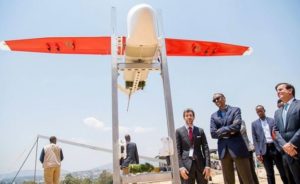
DFID/The Zip drones are launched from a catapult
The UK government will fund a trial of drone-based deliveries of blood and other medical supplies in Tanzania in an attempt to radically reduce the amount of time it takes to send stock to health clinics in the African nation by road or other means.
The scheme involves Zipline, a Silicon Valley start-up that began running a similar service in Rwanda in October. Experts praised that initiative but cautioned that “cargo drones” are still of limited use to humanitarian bodies.
The Department for International Development has not said how much money will be invested in the Tanzanian effort or for how long. It also announced plans to fund tests of drones in Nepal to map areas of the country prone to damage from extreme weather to help prepare for future crises.
“This innovative, modern approach ensures we are achieving the best results for the world’s poorest people and delivering value for money for British taxpayers,” International Development Secretary Priti Patel said.
Parachute deliveries
Zipline’s drones, called Zips, are small fixed-wing aircraft that are fired from a catapult and follow a pre-programmed path using GPS location data. The advantage of the design over multi-rotor models is that the vehicles can better cope with windy conditions and stay airborne longer. In theory, they can fly up to about 180 miles before running out of power, although Zipline tries to keep round trips to about half that distance.
Their drawback is that they require open space to land, in Zip’s case an area about the size of two parking spaces. Zipline gets around this issue by having its drones descend to heights of about 16.5 feet when they reach their destinations and then release their load before coming to rest. The aircraft fly below 500 feet to avoid the airspace used by passenger planes.
Read more here