 The United Nations is struggling to raise $200 million to help the families of victims of a deadly outbreak of cholera in Haiti, a senior UN official said Monday.
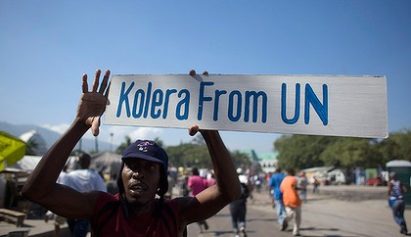
The financial aid follows the United Nations’ admission that it had a moral responsibility to help Haiti deal with the epidemic that has been blamed on UN peacekeepers.
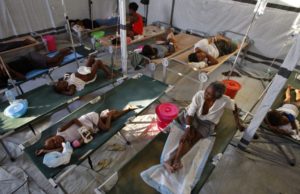
Almost 10,000 people have been killed and 700,000 affected since the outbreak in 2010. There are still 500 new cases of cholera reported every week.
UN envoy David Nabarro, who is leading negotiations with donors and with the Haitian government on the aid package, said drawing voluntary contributions was difficult.
“It is highly unlikely that we would be able to mobilize $200 million,” Nabarro said.
UN Secretary General Ban Ki-moon is due to announce later this month the aid package for the victims’ families and a separate fund also of $200 million to build up Haiti’s health infrastructure.
The envoy said it was “a reasonable amount of money, both for payments to families of individuals who died and for communities affected by cholera,” as well as a scholarship scheme for children.
The international drive to raise financial aid for Haiti’s cholera epidemic comes as a UN flash appeal for $120 million to help the country cope with the devastation of Hurricane Matthew is faltering.
Only 25 percent of the funding appeal has been raised so far, according to UN officials.
“The hurricane has created a new set of dangers because in the communities affected the risk of cholera is high,” said Nabarro, who returned from a trip to Haiti to assess damage.
While the United Nations maintains that it has a moral responsibility to help Haiti, it rejects claims that it is also legally responsible for the damages from the health emergency.
Several lawsuits filed by victims in U.S. courts have been rejected because of the immunity from prosecution accorded to UN missions.
Studies have traced the cholera outbreak to Nepalese peacekeepers who were dispatched to Haiti by the United Nations after the massive 2010 earthquake.
Read more here.