Taraji P. Henson (Flickr)
Taraji P. Henson is opening up about a role she didn’t snag because of Hollywood’s racist views on Black actresses.
In her memoir, Around The Way Girl, Henson shared that a filmmaker specifically wrote the role of a Russian stripper for her. But executives denied Henson the part.
In an excerpt obtained by USA Today, the actress said St. Vincent screenwriter and director Theodore Melfi tapped her for the comedic part. However, it ultimately went to white actress Naomi Watts.
“Time and again, I’ve lost roles because someone with the ability to green-light a film couldn’t see Black women beyond a very limited purview he or she thought ‘fit’ audience expectations,” Henson wrote.
“It was a meaty gig,” she added. “I would have loved it. Alas, I couldn’t get served at that particular restaurant.”
Written as part of a chapter called, “On Being a Black Woman in Hollywood,” Henson also discussed other racial topics. They include an anecdote about her son’s first racist encounter in kindergarten.
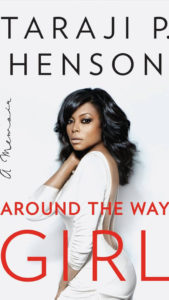
Taraji P Henson’s memoir “Around The Way Girl” (Atria Books)
On the income front, Henson explained her role as Queenie in The Curious Case of Benjamin Button earned her a paycheck she deemed “the equivalent of sofa change.”
The salary paled in comparison to her co-stars Brad Pitt and Cate Blanchett. In addition, Henson had to pay for her three-month hotel stay on earnings around “the lowest of six figures.”
Regardless, the actress overlooked her frustration to focus on getting into character.
“When I did that, my performance of Queenie became transformed into a spiritual awakening,” she wrote. “Not just for me but also the audiences who watched the film and cheered my performance.”
The role earned her an Academy Award nomination in 2009.
While speaking to Good Morning America, Henson shared she wrote her book to encourage others.
“That’s what we’re here for as humans. We make the world go ‘round. We inspire each other as humans,” she said. “I can’t even tell you how many stories I look at that keep inspiring me to get up every day and fighting the good fight.”
Around The Way Girl is available now.