 The recent string of deadly police shootings is enough to make any Black American fear for their lives. So much so that a Harlem-based writer chose to write his own obituary — before police had the chance to kill him.
According to The Huffington Post, the shootings of Alton Sterling and Philando Castile, coupled with the harsh reality that he too could suffer a similar fate, prompted Harlem writer Ja’han Elliot Jones to jot a down a few words about the “unapologetically Black” life he lived.
“Ja’han Elliot Jones, 24, was unarmed when shot and killed in conflict with local police officers,” the obituary reads. “His familiarity with the Black canon steered him into a potent state of unapologetic Blackness ― one in which the James Baldwins and Young Jeezy’s; the bell hookses and the Queen Bey’s; the Frantz Fanons and the Futures all occupied hollowed, cherished beautiful space in Jones’ identity.”
Elliot had planned to submit his piece to a local publication but scrapped the idea when he realized several of his friends felt similar frustration regarding the devaluing of Black lives, The Huffington Post reports. Cue the birth of the Black Obituary Project, an online platform allowing African-Americans to author their own notices of death.
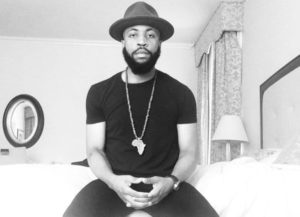
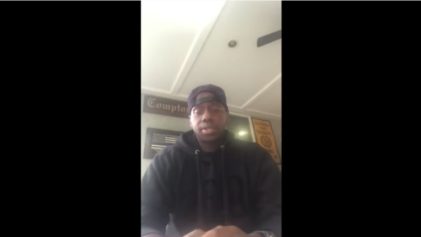
Ja’han Elliot Jones, creator of the Black Obituary Project. Image courtesy of The Huffington Post.
“The authors of these pre-written obituaries, all of whom are living at this point and time, serve to evidence the ease with which Black people conceive of their own death,” the project’s website states. “These are Black lives, as told by those who experience them in all their glory—tragedy—frustration—triumph.”
The Black Obituary Project is unique in that it allows Black people to control their own narratives while they’re still alive. Oftentimes when Blacks are the victims of police violence, the news media finds ways to criminalize them, digging deep into the victim’s past to create a less-than-perfect image of the life lost. For instance, the media was quick to report the 52 times Castile was previously stopped by police as a weak justification for his shooting. With Jones’ new platform, however, users have the chance to speak on the positiveness of their lives.
“So often, we are killed and our photos are posted about but our stories are not,” Jones told The Huffington Post. “This grants black folks agency we’re often denied in death. We are telling our stories, speaking of our triumphs and tragedies ― before anyone else attempts to do so for us.”
“We are all harmed ― young, old, righteous, ratchet, and all between,” he continued, noting that the goal of the project is to highlight the wide range of African-Americans who fall victim to state-sanctioned violence.
According to the publication, the Black Obituary Project currently has 80 published obituaries and will continue accepting submissions indefinitely.
Jarrett Payne, one of many contributors who published his self-authored obit to the website, confessed that the task of writing his own notice of death was depressing, but made him realize he wasn’t ready to die — especially at the hands of trigger-happy police.
“Jarrett Sylvester Payne, 30, was unarmed when shot and killed in conflict with local police officers,” his obituary read. “Payne was an amiable, passionate man who some would say was still searching. He became keenly adept within the poetic arts and deeply immersed himself in the 20’s of the Harlem Renaissance and The Black Arts Movements of the 60’s. The solace found in the wake of his passing lies greatly in the indomitable spirit of his being.”
Although the concept is uncomfortable, Jones said he wanted his project to be a therapeutic space for Black people, as well as a platform that showed their resilience.
“I pursued this project because I hoped to publicize that we, black people, have reconciled the darkness of our circumstances with the brightness of our aspiration,” Jones told The Huffington Post. “The darkness isn’t our doing. We live in it, but we didn’t create it. So highlighting that darkness, in my opinion, indicts our nation in a way I feel is necessary.”