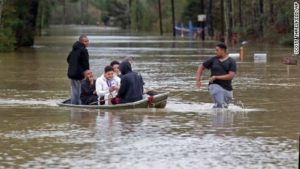
Zavion Watson pulls a boat full of relatives to dry land back in March, as they evacuate their homes in Independence, Louisiana. Photo by Scott Threlkeld/AP
Over 20,000 people have been rescued from their homes after heavy rains pummeled Louisiana over the weekend, causing devastating flash flooding. The weather catastrophe has since prompted President Obama to declare a state of emergency, as six people have already died in the historic flooding.
At a press conference Sunday, Gov. John Bel Edwards said roughly 10,000 people were in shelters due to the widespread flooding. Several flood victims were forced to sleep on the floor, however, because there weren’t enough beds.
Rising water levels near the highways also left several motorists stranded on Interstate 12. Mike Steele, communications director for the Louisiana Governor’s Office of Homeland Security and Emergency Preparedness, told Weather.com that 160 high-water vehicles were used to rescue stranded motorists Sunday night, along with 35 watercraft. The number of Louisiana National Guard rescues this weekend totaled over 3,500 people and 166 pets, the news site reports.
“The water came up really fast overnight and we have more rain coming in now,” he said. “What was going on last night, especially around two and three o’clock in the morning, sounded exactly like Katrina.”
According to ABC News, more than 30 inches of rain fell in southern Louisiana over the past week. The largest amount fell in Watson, Louisiana, which received a whopping 31.4 inches of rain, the National Weather Service reports. The other hardest hit parishes include East Baton Rouge, St. Helena, Livingston, and Tangipahoa.
Edwards and Obama discussed the pressing matter Sunday evening, after which the president granted the governor’s request for a federal emergency declaration, White House Deputy Press Secretary Jen Friedman told reporters. The federal assistance will likely cover the costs of temporary housing and home repairs, as well as low-cost loans to help pay for uninsured property losses, the Advocate reports.
“His prayers are with the people of Louisiana, and that his Administration will continue to support the state’s ongoing recovery,” Friedman said.
Gov. Edwards and his family were among those who had to evacuate their home. Per NBC News, the basement of the governor’s mansion was flooded. Electricity in the residence has also been shut off as a precaution.
“It’s not over,” Edwards warned. “The water’s going to rise in many areas. It’s no time to let the guard down.”
Authorities have already confirmed the deaths of six people as a result of the flooding. The latest casualty was reported Sunday night, in which a 59-year-old man was overtaken by the current as he walked along the street in Tangipahoa Parish, the news site reports. A grandmother in Rapides Parish also drowned while trying to save her grandson.
As the fear of additional rainfall looms, Louisiana officials are working to get the hardest hit parishes up and running again. Nola.com reports that all motorists have been rescued from Interstate 12, but cars are still there. Cell phone service in Baton Rouge has also been restored. However, many roads leading in and out of certain parishes remain blocked or closed. Lastly, FEMA is expected to open a number of recovery centers. According to Nola.com, the agency is working to bring in 1.2 million liters of water and 750,000 meals for people who are displaced.


