South Africa President Needs Land Expropriation Bill Clarified, Many Believe It Will Lead to ‘Violent Land Grabs’

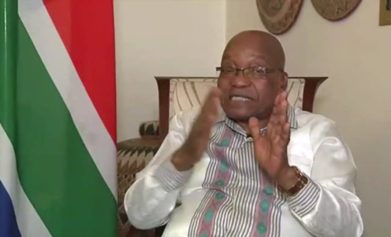
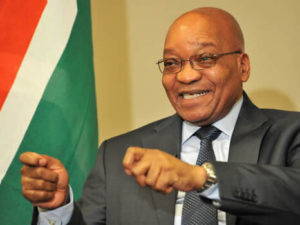
Jacob Zuma, president of South Africa

Jacob Zuma, president of South Africa

South African President Jacob Zuma has asked parliament to explain the process it followed in passing a bill allowing state expropriations of land to redress racial disparities in land ownership.

Land is an emotive issue in Africa’s most industrialized country more than two decades after the end of apartheid, with most of the land still in white hands.

Zuma said he needed to clarify how the bill was passed, before deciding whether to sign it into law or refer it back to the legislature, the presidency said in a statement on Tuesday.

“President Zuma received petitions against the signing of the Bill into law from individuals and various organizations,” the presidency said.

In the pipeline since 2008, the bill has been criticized by opposition parties, with some saying it was unconstitutional.

The ruling African National Congress said the bill would tackle injustices imposed during white-minority rule.

The official opposition party, Democratic Alliance, has asked Zuma not to assent to the bill, raising, among other issues, that it does not provide adequate compensation guarantees and that it was open to abuse.

However, experts say the bill will not signal the kind of often violent land grabs that took place in neighboring Zimbabwe, where white-owned farms were seized by the government for redistribution to landless blacks.

Regulatory uncertainty in the country has worried investors in the key mining and other sectors, amid warnings the country’s credit ratings could be downgraded to “junk” status as the economy teeters on the brink of recession.

Read more here.
Still independent.

We hope this story was worth your time. For over 14 years, Atlanta Black Star has stayed Black-owned and independently run. We didn't get here by waiting on ad budgets that were never built to prioritize us. Our readers did that.

Corporate support for Black media has always been thin. Outlets like ours get roughly 1% of the $170 billion spent on U.S. advertising each year, and that margin is shrinking further as advertisers walk back the DEI-linked commitments they made in 2020. That's the backdrop. It's not why we're asking.

The wider picture isn't any steadier. Newspaper ad revenue has fallen more than 80% since 2005, and local newsrooms are closing at a rate of roughly two a week nationwide. When outlets go under, it's rarely the ones built to center a Black perspective from the ground up that get to stick around.

We know a request for support isn't why you came here. But without readers choosing to fund this work directly, the depth of reporting we can do at home and abroad shrinks along with everyone else's. If you're not in a position to give, that doesn't change how much we value you as a reader.

If you are able to, a recurring contribution does more for us than a single one-time gift, because it lets us plan the next investigation instead of just the next invoice. It takes about 30 seconds, no long form, no account. Thank you for continuing to support independent journalism and freedom of the press.

Back to top