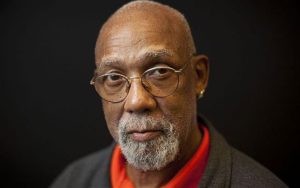
U.S. Olympian John Carlos, famous for raising his fist at the 1968 Olympic medal ceremony in Mexico City. Image courtesy of Perdue.edu
Black sprinter John Carlos wasn’t prepared for the severe backlash he received after raising his leather-clad fist in defiance at the 1968 Olympic medal ceremony in Mexico City. Despite the death threats, assassinations on his character, and ultimate crumbling of his marriage, the former athlete said he would do it all over again.
“Still, I wouldn’t change what I did,” Carlos wrote in an essay for Vox.
Now, the USA Track and Field Hall of Famer is urging today’s Black athletes to use their platforms to address the ongoing issues of systematic racism and oppression of Black people. In his piece, Carlos details the pain he and family suffered as a result of his actions; but he also explains the importance of standing up for what you believe in – even if it might land you in hot water.
“Fear is all around anyone who’s trying to make change,” he wrote. “But the men and the women of this world step through fear and challenge this system so other people can have a better life. And so I’m really frustrated with a lot of today’s stars, who have an opportunity to speak up but don’t. They think they’re secure in their little bubbles of fame and wealth. They think racism and prejudice can’t touch them because they’ve achieved a certain level of success.”
Carlos asserts that although these Black athletes have achieved fame, their mothers, fathers, friends, and even children aren’t exempt from experiencing prejudice or racism.
“Your mother’s not secure in that bubble,” Carlos said. “She doesn’t have a tattoo on her forehead that says she’s part of your lineage. Your son is not secure. Your daughter is not secure. Your father is not secure. The kids you grew up with are not secure.”
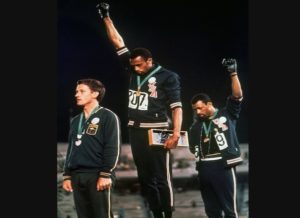
Gold medallist Tommie Smith (center) and bronze medalist John Carlos (right) 17 1968 Summer Olympics
“If you’re famous and you’re black, you have to be an activist,” he continued. “Activism is a guy who says, ‘I’m a multimillionaire, and I’m going to help.’ Activism is transparent.”
In the aftermath of the police killings of Alton Sterling and Philando Castile, Black celebrities like Beyoncé, Killer Mike, and Jesse Williams have used their status of fame to take a stand against racism and police brutality. NBA superstars LeBron James, Dwight Howard, Carmelo Anthony, and Chris Paul opened Wednesday night’s ESPY Awards with a moving speech denouncing police brutality in Black communities.
“The system is broken, the problems are not new, the violence is not new, and the racial divide definitely is not new, but the urgency for change is definitely at an all-time high,” Anthony, who plays for the New York Knicks, said.
Though his actions at the Olympic medal ceremony are now viewed as courageous, Carlos recalled the toll his raised fist took on his family and marriage.
“My wife and kids were tormented,” he wrote. “I was strong enough to deal with whatever people threw at me, because this is the life I’d signed up for. But not my family. My marriage crumbled. I got divorced. It was like the Terminator coming and shooting one of his ray guns through my suit of armor.”
Carlos goes on to detail his subsequent suspension from the U.S. Olympic team, along with fellow teammate Tommie Smith, who also displayed a raised fist at the ceremony.
According to Colorlines, Carlos later retired from running but went on to work for the U.S. Olympic Committee and the 1984 Olympics’ Organizing Committee.


