Black country singer Coffey Anderson thought he was doing the Black community a favor by sharing a video on how to “diffuse tension” during a traffic stop. But the artist got a stunning response instead.
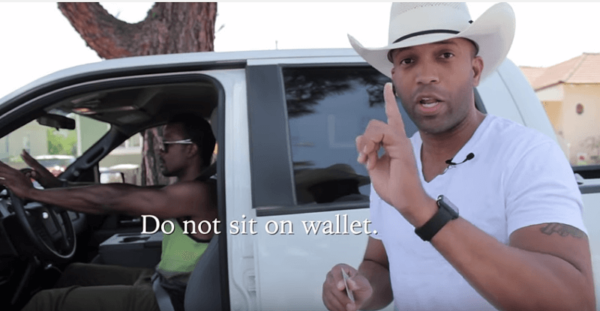
In a Facebook clip posted July 7, Anderson has a colleague demonstrate techniques Black men and women can use to avoid getting killed by police. The post was in response to the brutal deaths of Alton Sterling and Philando Castile by cops that week.
Anderson’s tips include placing both hands on the steering wheel with fingers extended and placing the driver’s license and registration on the dashboard all before the officer approaches the window. He also advises against drivers keeping wallets in their back pockets so as not to scare the police when he or she sees the motorist reaching to grab it.
The response has been one of frustration from commenters who were irritated that the artist focused on what drivers were supposedly doing wrong rather than taking aim at police who react with violence.
“Why don’t you get a video training officers how to treat and encounter black peoples?” asked Tyshawn Gardner. “Let’s do this both ways.”
Patricia Bernard also questioned why drivers were to blame for fatal police actions.
Porsche Fisher laughed at the idea of Anderson’s method working in all situations.
Nicolas Howard explained reaching for documents before the officer reaches the vehicle could prove dangerous.
Alain Emmanuel said the video did not provide a solution to police brutality against Blacks.
Amid the criticism, Anderson responded to several comments – including those above.
He explained to Gardner the video was made to “ease [the] tension when pulled over.”
“I pray the bad apples are being removed from the force everyday, he continued. “But until then, I wanted to have something that we could follow to just maybe save somebody.”
Anderson also acknowledged the circumstances differ for each situation.
Still, some fans thought the advice was helpful and spot on.
Boyd Ouden shared Coffey’s tips are the same things his mother told him when he got his driver’s license. He also shared the same information with his son.
“I even go as far as to roll down all the windows so the officer can see in the car before he gets to my window. We have to get home safe,” he said. “God bless you young man.”