

Image via the Atlanta History Center
The Summerhill Riot
By 1966, Black officers were assigned to regular patrol, and a crime prevention bureau was established. This progress occurred as the Civil Rights Movement and riots were taking place around the country. In fact, Atlanta had its own riot and accusations of police brutality to deal with. On September 6, the Summerhill Riot took place in the historic Black and Jewish neighborhood. The four-day riot ended with one person dead and 20 injured. Many of the protesters were young and inspired by Stokely Carmichael and Student Nonviolent Coordinating Committee.
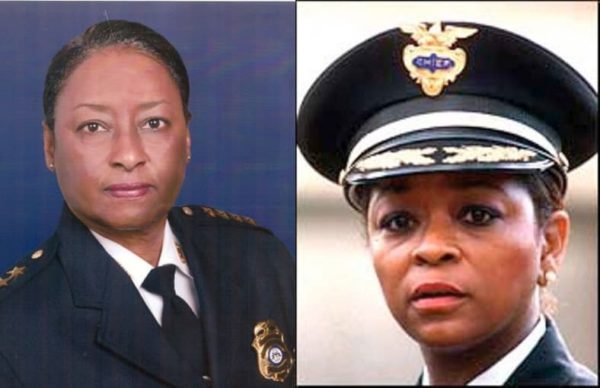
Thetus Knox and Beverly J. Harvard
The Black Female Officers
In 1971, the Atlanta police also began to push for gender equality. So the first African-American woman, Linnie Hollowman, was hired to patrol the Atlanta streets. Like the first eight black officers, she faced an uphill battle to be considered an equal. The first two women to gain rank were Thetus Knox and Blanche Nichols two decades later. Knox served as field patrol sergeant, section commander of the criminal investigations division and zone commander in her career. These two women paved the way for Beverly J. Harvard to become the first African-American woman to hold the rank of chief of police in any major U.S. city in 1994.
 From Relative Obscurity to Television
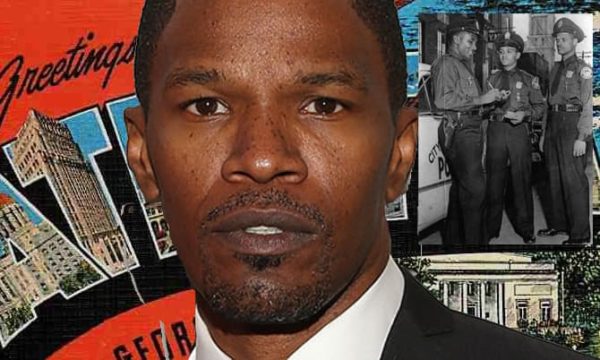
Back in January, Shadow and Act reported that Amy Pascal and Sony Pictures Television will team up with Jamie Foxx to executive produce a Black cop TV series. There isn’t a network, cast or release date as of yet. However, the show is based on Thomas Mullen’s Darktown. The recent novel documents the racial controversy surrounding the first eight Black officers in 1948.
The fictitious crime novel tells the story of two officers searching for a Black woman who was last seen in a car driven by a white man. Officers Boggs and Smith will risk everything to find the woman. If the show is tied to the book, it will have a similar feel to 2014’s True Detective season 1.


