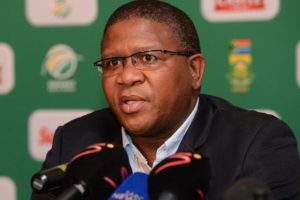
Fikile Mbalula (Hype Avenue)
South Africa’s sports minister has announced that he will no longer “beg for racial transformation”, but will start forcing the country’s sporting federations to fulfil racial quotas.
Fikile Mbalula said in a speech on Sunday that the cricket, rugby, netball and athletics federations would be banned from bidding for any international tournaments until their numbers of black players improved.
South Africans of color, more than 90% of the population, remain the minority in starting line-ups more than two decades after the end of draconian white-minority rule which prohibited them competing at the highest level.
For more than 50 years, black athletes were banned from representing their national sides. Thanks to these policies, it’s taken South African cricket more than 20 years to produce Temba Bavuma, who earlier this year became the first black cricketer to earn the country a century in Test cricket.
The spectre of exclusion still hangs over South African rugby, too: under Springbok coach Heyneke Meyer, who resigned in December, there were frequent complaints of black players being sidelined while white players were being played out in position.
But despite this reality, many pundits have expressed concern that Mbalula’s stance is too harsh and will merely harm South Africa sport at a time when the national rugby federation was planning to take part in next month’s bidding for the 2023 World Cup.
They say quotas go against the central tenet of professional sport – that an athlete be chosen on merit alone. But in a country like South Africa, sport has never been about merit.
Read more here.