Vice Chancellor of University of the West Indies Says White Supremacy Destroys Black Communities

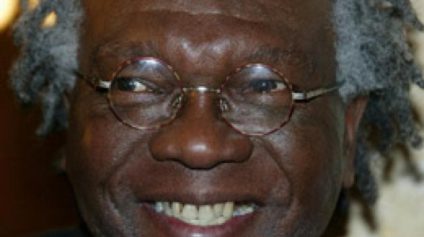
Image of Sir Hilary Beckles via Caribbean 360

Sir Hilary Beckles

The Vice Chancellor of the University of the West Indies has called for social change in Barbados, saying that Blacks continue to be marginalized and warning that the situation cannot continue.

Professor Sir Hilary Beckles says that while people have spoken about Barbados as a global symbol of stability, a critical question that must be answered is what part of that stability is consensus and what part is repression.

“The Barbados society in its current structure is not sustainable,” cautioned the historian during a lecture on slavery and the 1816 rebellion by General Bussa, one of the country’s national heroes.

The Barbadian-born academic described the social structure as one of white supremacy and Black marginalization, adding that this “economic white supremacy system” is subversive to democracy.

“There is, in Barbados, a division of labor which says that the Black community will occupy and control the politics and the white elite will control the economy…All of us as citizens of Barbados have to examine this model and transform it. It has to be transformed in order to fulfill the vision of our ancestors in General Bussa’s time, General Greene and Clement Payne,” said Beckles, referring to other freedom fighters.

“It can only be done if the economic democracy movement is revitalized and insisted upon because, in my judgment, the young people of this island deserve a more democratic society. They have paid their price in history for democracy and freedom.”

Read more here.
Democracy needs journalism it can trust.

This election season, the stakes are higher than usual — and so is the pressure on newsrooms to soften their coverage, stay quiet, or just disappear. Independent reporting, the kind that answers to readers instead of advertisers or political pressure, matters more in a moment like this, not less.

For over 14 years, Atlanta Black Star has stayed independent and reader-funded. We have no corporate owner and no shareholders telling us what to cover or how to cover it. That independence is also our biggest vulnerability: nothing protects it except readers choosing to fund it directly.

Newspaper ad revenue has fallen more than 80% since 2005, and local newsrooms are closing at a rate of roughly two a week nationwide. When outlets go under in a moment like this, it's rarely the independent, reader-funded ones that get to stick around.

We know a request for support isn't why you came here. But without readers choosing to fund this work directly, the depth of reporting we can do at home and abroad shrinks along with everyone else's. If you're not in a position to give, that doesn't change how much we value you as a reader.

If you are able to, a recurring contribution does more for us than a single one-time gift, because it lets us plan the next investigation instead of just the next invoice. It takes about 30 seconds, no long form, no account. Thank you for continuing to support independent journalism and freedom of the press.

Back to top