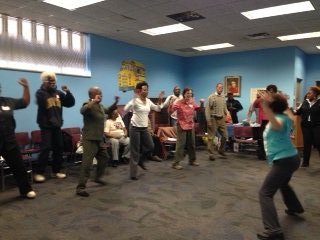
Several members of clergy and the Health Promotion Action Coalition gathered for a weekly luncheon Thursday to discuss plausible solutions for alleviating health disparities found so commonly among African-Americans.
As pastoral leaders filled the seats of the Park Bar restaurant in Atlanta, many waited to hear from the voice that would suggest noteworthy solutions — HPAC, Inc. Board Chair, Dr. Zenobia Day.
“My passion is remission,” Day said during her introduction, as she described how the non-profit organization is eager to improve health and decrease disparities particularly found among people of her own race.
A practicing physician who received her doctoral degree at Morehouse School of Medicine, Day explained the risk factors associated with what the organization deems the “dirty dozen,” a phrase used to generalize health variations ailing the Black community.
The “dirty dozen” includes diabetes, obesity, heart disease, cancer, stroke, hypertension, kidney disease, Alzheimer’s disease, mental disorders, arthritis, HIV, and chronic respiratory diseases such as COPD, asthma, bronchitis, and emphysema.
According to the American Heart Association, heart disease is the No. 1 killer for all Americans, but for African-Americans the risk is much higher. In fact, the prevalence of high blood pressure in African-Americans is the highest in the world — so much so that it is often referred to as the silent killer.
Because the Black church has always held the Black community together, Day expressed that a voice that comes from the pulpit is one of great influence.
“What can we do about it? What are the solutions?” Day posed to the pastoral leaders, some of whom lead congregations of up to 4,400 members. They included associate minister Rev. Robert F. Kilgore of Hillside International Truth Center, and pastor and Emeritus Imam Plemon T. El-Amin, who has served for the past 23 years as the resident imam of the Atlanta Masjid of Al-Islam — one of the largest and most progressive mosques in the United States.
Along with clergy, HPAC Inc. partners with other organizations such as the Fulton County Partnerships to Improve Community Health to increase physical activity, improve nutrition and increase the number of tobacco-free environments within African-American communities.
“It is our duty to do something about this health, and the health and wellness of our communities and congregations,” Day said. “We’re not afraid to stand up and say what’s killing us and what’s hurting us, but we’re also not afraid to stand up and say we have solutions and how can we heal.”