
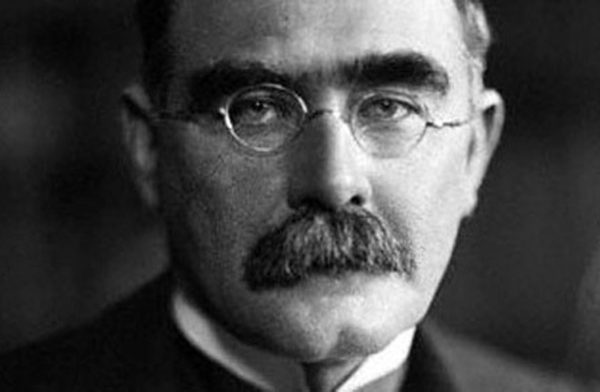
10 Disturbing Facts About ‘Jungle Book’ Author Rudyard Kipling and His Racist Views

rudyard-kipling

Rudyard Kipling

Escaping Rudyard Kipling’s Legacy 

The British author famous for The Jungle Book (1894), has been the subject of scholarly debate about his pro-imperialist ideas and themes interlaced in his body of work. The book has been adapted for screen eight times and theater countless times. This year, Disney will release the latest live action adaptation with actors Idris Elba, Scarlett Johannson, Lupita Nyong’o and others, reintroducing his tale of a young Indian child among animals. That controversy has been brought back into the public zeitgeist. Filmmaker Jon Favreau backed away from that controversy by adding some new twists.
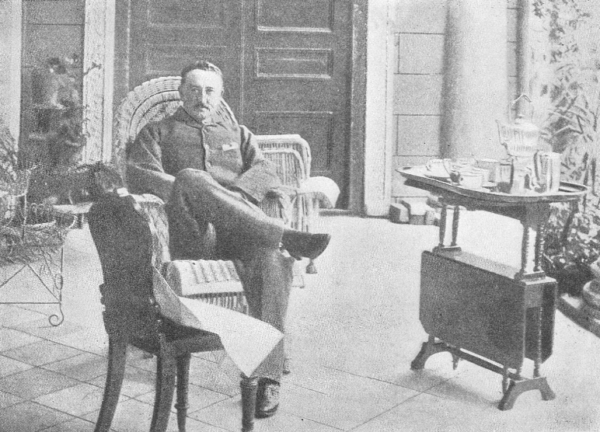
 

Cecil Rhodes

Kipling’s Idol: Imperialist Cecil Rhodes

Every year since 1898, Kipling traveled to South Africa for winter holidays. Kipling and his family stayed on the estate of British imperialist Cecil Rhodes — the same man who slaughtered scores of Black natives to gain land and resources for the British and his own personal motives. Rhodes was a mining magnate responsible for starting the modern diamond industry. The imperialist considered native South Africans as “in a state of barbarism.” Kipling’s family stayed in “The Woolsack,” a house on Cecil Rhodes’ estate at Groote Schuur, which is now one of the student residences for the University of Cape Town.

Subscribe To The ABS Newsletter — Get our stories in your inbox.

Independent journalism still matters.

We hope this story was worth your time. For over 14 years, Atlanta Black Star has stayed Black-owned and independently run. We didn't get here by waiting on ad budgets that were never built to prioritize us. Our readers did that.

Corporate support for Black media has always been thin. Outlets like ours get roughly 1% of the $170 billion spent on U.S. advertising each year, and that margin is shrinking further as advertisers walk back the DEI-linked commitments they made in 2020. That's the backdrop. It's not why we're asking.

The wider picture isn't any steadier. Newspaper ad revenue has fallen more than 80% since 2005, and local newsrooms are closing at a rate of roughly two a week nationwide. When outlets go under, it's rarely the ones built to center a Black perspective from the ground up that get to stick around.

We know a request for support isn't why you came here. But without readers choosing to fund this work directly, the depth of reporting we can do at home and abroad shrinks along with everyone else's. If you're not in a position to give, that doesn't change how much we value you as a reader.

If you are able to, a recurring contribution does more for us than a single one-time gift, because it lets us plan the next investigation instead of just the next invoice. It takes about 30 seconds, no long form, no account. Thank you for continuing to support independent journalism and freedom of the press.

Latest from Atlanta Black Star

Back to top