Haiti Camps
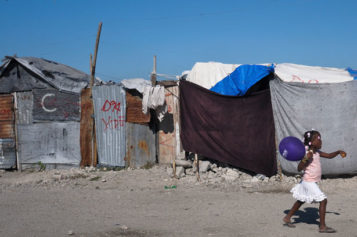
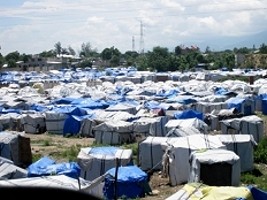
The latest Displacement Tracking Matrix indicates that more than six years after the January 12, 2010 earthquake, an estimated 17,119 households, or 62,590 individuals, are still residing in 36 IDP, or internally displaced people, sites in the earthquake-affected communes.
It is important to note that this report incorporates more precise IDP data gathered through registration operations of three camps (Acra Sud, Acra Cite Nord Delmas 33 and Village AFCA II). Consequently, when comparing the figures from the 24th round of the DTM, the number of households and individuals residing in IDP camps has increased, although the number of opened camps has decreased. The population estimates of these specific camps had previously been determined through aerial imagery (one family per shelter), as on-sites assessments were inaccessible due to security concerns. Therefore, following five years of settlement and the population’s refusal to be registered, the registration of Acra Sud, Acra Cite Nord Del 33 and Village AFCA II, lead to an increase of 17 percent in the total IDP household population and a 5 percent increase in the total number of IDP individuals.
The affected communes housing the IDP population are mostly located in the metropolitan area of Port-au-Prince. These are the communes of Carrefour, Port-au-Prince, Delmas, Cite Soleil, Petion-Ville, Tabarre and Croix-des-Bouquets, as well as the communes situated in the Palms Regions, such as Leogane (considered the epicenter of the earthquake) and Gressier.
The communes of Jacmel, Petit-Goâve and Grand-Goâve in the Palm Regions and Ganthier in the border region formerly housed IDP sites which have since closed.
As of March 31, the three communes with the highest IDP population are the following:
1. Delmas, with the highest population of IDP households with 10,278 households (60 percent of the total households), corresponding to 32,904 individuals (52.6 percent of IDP individuals).
2. Croix-des-Bouquets, the second largest with 2,487 households (14.5 percent of IDP households), corresponding to 10,838 individuals (17.3 percent of IDP individuals). It is important to note that the households residing in the camps known as Corail Sector 3 and Sector 4 are also included in the commune of Croix-des-Bouquets.
3. Léogâne, the third largest commune, with 1,163 households (7.7 percent of IDP households), corresponding to 4,801 individuals (8 percent of IDP individuals).
Read more here.