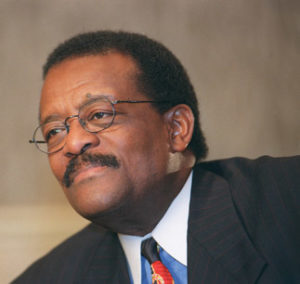
 Thanks to the success of The People v. O.J Simpson, people are becoming reacquainted with Johnnie Cochran. The show excels in recreating the most familiar and famed part of Cochran’s persona, his defense of Black celebrities. However, beneath the eloquent word play and armor of flamboyance laid the heart of a civil servant working to tip the scales of justice in favor of the many unknown Black victims of police brutality. This was Johnnie Cochran’s fight before the O.J Simpson trial, and now an upcoming biopic on his life will explore this overlooked and under-appreciated aspect of his character.
The Hollywood Reporter first broke news that a Johnnie Cochran biopic was in the works. The film will shed light on the Ron Settles case. A collegiate football player at California State University at Long Beach, Settles was arrested for speeding by the Signal Hill, California police department in 1981. Settles was beaten while in police custody. Hours after his arrest, he was found hanging in his jail cell. Originally ruled as a suicide, Settles’ family hired Cochran because of the suspicious nature of his death. Despite a lengthy history of police brutality in the Signal Hill department, no charges were filed. But Cochran pursued the case and filed a civil rights lawsuit. The case was settled out of court for $1 million. David McMillan (“Lucifer”) wrote the script, which will be produced by Kevin McKeon and Robbie Brenner (Dallas Buyers Club).
“Kevin and I are so excited to work on David McMillan’s incredibly well-written, timely script,” Brenner said. “The subject matter resonates now just as powerfully as it did in 1981, and we look forward to making an honest, provocative and challenging film.”
The Settles case was and still is an all-too-familiar circumstance for Black people in police custody. The aftermath of this case laid the building blocks for the awareness of police brutality and corruption. This pathological distrust of police authority led to O.J Simpson’s acquittal. Settles’ murder also set Johnnie Cochran’s legal strategy of filing civil suits against police departments and making them pay in the literal sense.
Cochran helped Abner Louima get an $8.75 million settlement from New York City, and ‘Geronimo’ Pratt received a $4.5 million settlement. Pratt’s 26-year wrongful conviction was overturned after years of Cochran’s diligent work as his original attorney. Cochran was an important figure in helping Black people have a shot at quality legal representation in this country.