Aliko Dangote
After waiting in line for more than four hours to buy gasoline in Nigeria’s capital, Abuja, taxi driver Adebayo Olawole considered himself fortunate he got a half-filled tank. The day before, he got to the front of the line and was told there was none left.
“I’ve not made any money in two days,” Olawole, 38, said outside a Total Nigeria Plc station in the Garki district. “Today is my lucky day.”
Gasoline shortages are common in Africa’s largest oil producer, which imports the majority of its refined fuel, straining the nation’s finances and currency. Decades of poor maintenance, corruption and mismanagement have left Nigeria’s four state-owned refineries working at a fraction of their capacity.
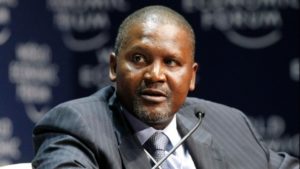
While the worst shortage in a decade almost caused the West African nation’s economy to shut down in May, with diesel-fired electricity and phone services on the verge of collapse, the situation has created investment opportunities for people including Africa’s richest man, Aliko Dangote, with a wealth of $14 billion, according to the Bloomberg Billionaires Index.
Cement Business
Dangote, who has made most of his money through his African cement business, is building a 650,000 barrel-per-day oil refinery and petrochemical plant in the commercial capital, Lagos, scheduled for completion by early 2018. The facility, with capacity to produce 55.2 million liters of gasoline daily, will produce other fuels as well as fertilizer and polymers, according to Devakumar Edwin, chief executive officer of the Dangote Group.
“It’s a very large refinery. We can produce the entire gasoline requirements of the country,” he said.
On completion, the refinery would be the fifth-biggest in the world after plants in Venezuela, South Korea and India, according to data compiled by Bloomberg. It would also be the world’s largest single-train refinery, Dangote told reporters at the construction site on Jan. 10.
“From Nigeria all the way down the coast to Senegal and all the countries in between, there’s almost no functional refinery except the one in Ivory Coast,” said Dolapo Oni, the Lagos-based head of energy research at Ecobank Transnational Inc. “Dangote is going to be able to plug that market.”
Read more at www.bloomberg.com