
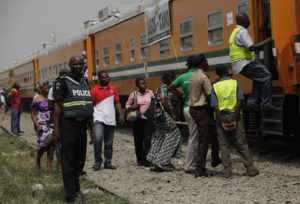
 Few passenger trains operate in Africa today, but that is set to change in the coming decades. Over the Christmas weekend, Mali and Senegal signed a $2.75 billion deal with the state-owned China Railway Construction Corp. to renovate a 745-mile railway connecting the countries’ capital cities, Bamako and Dakar, over the next four years, according to Reuters.
“This will allow us to have 100-km-per-hour passenger trains. … Today, passenger trains are not even doing 20 km per hour,” said Transport Minister Mamadou Hachim Koumare.
This new rail development in West Africa is just part of a major web of tracks being spun across the African continent, according to the Mail & Guardian. Billions of dollars and thousands of miles of track are being invested into rail projects from Nigeria and Cameroon to Kenya and Ethiopia. The hope is that these projects will spur economic development and help lift the world’s poorest continent out of poverty.
The World Bank reported that in addition to improving an economy’s efficiency, public transportation can help address poverty by providing better access to jobs and services. Transportation also helps reduce social exclusion in poor communities.
“The urban poor face a complex trade-off between residential location, travel distance, and travel mode, in an attempt to minimize the social exclusion associated with low earning potential,” said the World Bank. The poor often choose to live in areas with cheaper living expenses despite few available jobs, instead of living in areas with lots of employment opportunities and higher living costs.
Ibrahim Mayaki, CEO of the New Partnership for Africa’s Development, has often spoken on the importance of infrastructure to provide jobs and raise income levels for Africa’s poorest.
“Transport access can improve education and markets for farmers’ outputs and others by cutting costs, facilitating private investment, improving jobs and income levels for many,” he wrote in an essay for Africa Renewal, the U.N.’s Africa news magazine.
Traditionally, public transportation in Africa has relied on a variety of buses that are notoriously dangerous and unpredictable, according to travel website Lonely Planet.
Read more at www.deseretnews.com


