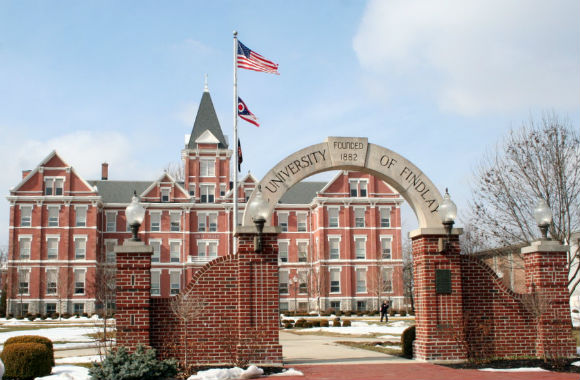
 Two Black college students are suing a private Ohio university, claiming they were expelled based on false allegations that they raped a white female student in September 2014. In court papers, Michael Traven, the attorney for Alphonso Baity and Justin Browning, describes the University of Findlay’s investigation into the rape allegations as a “sham.”
The university conducted a 24-hour investigation into claims that a white female student, identified as “M.K.,” was raped by Baity and Browning. After a quick investigation, both student-athletes were expelled and branded rapists. These are accusations that could follow them for the rest of their lives because potential employers often Google people they intend to hire.
However, Baity and Browning claim the sexual encounter was consensual. According to Reason, M.K. engaged in sexual encounters with both Baity and Browning in their dorm room. Several witnesses, who heard noises from the sexual encounter, said they never heard her say no or cry for help. After the encounter, M.K returned to her dorm, where she told another student she enjoyed the experience.
But 10 days later she had a change of heart and accused Baity and Browning of raping her. Reason said the university responded by carrying out an investigation in which they only talked to white female students. However, when the female students backed up Baity and Browning’s claim that the encounter was consensual, the university threatened them. According to the lawsuit, one student lost her work-study job and another was threatened with expulsion if she did not testify against the student-athletes.
This case raises several issues. Campus rape is a thorny subject, but there are cases when male students have been falsely accused. Rolling Stone faced a huge backlash after it published a sensational story about a rape case at the University of Virginia last year. But they ended up with egg on their face after the accuser’s story fell apart. The magazine issued a public apology and is currently facing a $25 million lawsuit from the fraternity implicated in the story.
Jeannie Suk, a professor at Harvard Law School, said Black male students are often the target of rape accusations.
“Administrators and faculty who routinely work on sexual-misconduct cases, including my colleague Janet Halley, tell me that most of the complaints they see are against minorities, and that is consistent with what I have seen at Harvard,” said Suk in an article in The New Yorker.
The actions of M.K. are also nothing new. In the not too distant past, Black neighborhoods were burned and Black men lynched because white women claimed they had been raped. However, in some cases the women were having consensual affairs with Black men and were too ashamed to admit it, so they made up rape charges.
Now, two young Black men are fighting rape charges that could hang over their heads for the rest of their lives.
Washington Examiner writer Ashe Schow said this was one of the worst lawsuits involving students and a college that he has ever read.
“I’ve read and reported on numerous lawsuits by accused students—and every one has been stunning,” Schow said. “So you’ll have to believe me when I say this one is the most incredible I have ever seen.”