 The first few times American landscape architect Sara Zewde visited Rio de Janeiro’s Valongo Wharf, she struggled to comprehend the recently unearthed remnants of what was once among the biggest slave ports in the world.
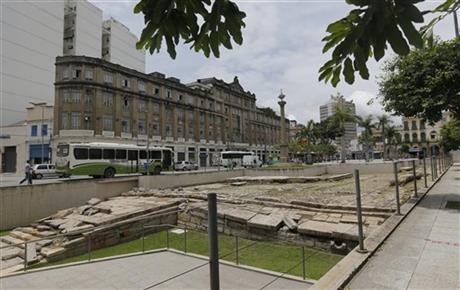
Excavated starting in 2011, the site is largely inscrutable, even to the trained eye: The spot where more than a half million enslaved African men and women debarked after harrowing journeys across the Atlantic is an open archaeological pit containing a jumble of paving stones.
A few paragraphs-long cardboard signs are the sole indication of the historical significance of the site, which experts hail as one-of-a-kind in the Americas.
The unearthing of Valongo, which was excavated as part of a multibillion-dollar project aimed at bringing big business to Rio’s long derelict port neighborhood, has sparked heated discussions about how black heritage sites are handled in Brazil. While the developers of the “Porto Maravilha” (“Marvelous Port”) project insist they’ve done more than enough by excavating the site, black activists say more is needed to give the space its due.
“The fact is that in Brazil sites dealing with African heritage are just less important,” said Elisa Larkin Nascimento, who heads Rio’s Ipeafro Afro-Brazilian Studies and Research Institute. “It’s a very neat statement of Brazilian racism. They are not interested in the history of Africans in Brazil.”
Brazilians have long been loath to grapple with the shadow of slavery in a country that took nearly half of the more than 10.5 million Africans shipped to the Americas, compared with roughly 645,000 taken to the United States. Slavery was only outlawed here in 1888 — more than two decades later than in the U.S.
Slavery’s legacy still casts a pall over Brazil, with its dark-skinned majority at the bottom of the economic and social pyramid, yet many Brazilians view their country as free from prejudice and institutionalized racism. There has yet to be a civil rights movement, and discussions about slavery only began to creep into public discourse in recent years.
The tortured history of Valongo encapsulates “Brazil’s unofficial policy of forgetting” about slavery, said Washington Fajardo, who heads Rio’s municipal cultural heritage agency.
Read the full story at abcnews.go.com