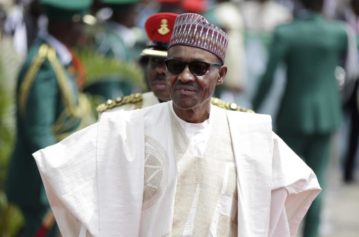
Nigeria has “technically won the war” against Islamist Boko Haram militants, President Muhammadu Buhari says.
He told the BBC that the militant group could no longer mount “conventional attacks” against security forces or population centers.
It had been reduced to fighting with improvised explosives devices (IED) and remained a force only in its heartland of Borno state, he said.
Boko Haram has been described as one of the world’s deadliest terror groups.
Critics of the government argue that it has exaggerated the scale of its success against the militants, and that each time the army claims to have wiped out Boko Haram, the militants have quietly rebuilt.
The group’s six-year insurgency in north-eastern Nigeria has led to the deaths of some 17,000 people, destroyed more than 1,000 schools and displaced more than 1.5 million people.
President Buhari has given the army until the end of this year to defeat the group – a deadline that is likely to be extended as Boko Haram is still bombing some areas despite losing towns under its control.
But he told the BBC that the jihadists had been all but driven out from Adamawa and Yobe states, and their way of operating curtailed.
“Boko Haram has reverted to using improvised explosive devices (IEDs),” he said. “Indoctrinating young guys… they have now been reduced to that.
“But articulated conventional attacks on centers of communication and populations.. they are no longer capable of doing that effectively.
“So I think technically we have won the war because people are going back into their neighborhoods. Boko Haram as an organized fighting force, I assure you, that we have dealt with them.”
Only a few days ago, Islamic State, to whom Boko Haram is affiliated, said its West Africa division had launched more than 100 attacks – killing more than 1,000 people – over the past two months, the Site Intelligence Group, with monitors jihadist websites, reported.
Bokon Haram has also broadened its threat to neighboring countries, around the Lake Chad region. It reportedly killed five people in a raid in Niger earlier this week.
Mr Buhari said that Nigeria had reorganized and reequipped the military, which had received training from the British, the Americans and the French.
A key priority for the government now, he said, is to rebuild infrastructure and help all displaced people to return to their homes.
Read the full story at bbc.com