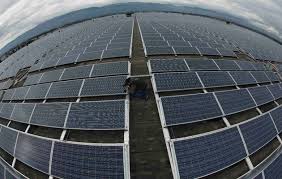
 Africa has done little to contribute to global warming, but it showed some serious climate leadership this week by announcing a $20 billion plan for a massive renewable energy initiative.
New goals under the African Renewable Energy Initiative, announced Tuesday at the United Nations climate summit in Paris by the African Development Bank and heads of state, would bring 300 gigawatts of renewable energy online by 2030—that’s twice as much electricity as is currently produced on the continent.
The announcement was deemed “game changing” by organizations and officials participating in the summit.
“This is an exceptional moment in Africa’s history, I am proud to see Africa, despite its current low emissions, lead the world in realizing these easily available and underutilized natural resources. Increased access to renewable energy will drastically increase the well-being of energy-poor Africans,” Mohamed Adow, Christian Aid’s senior climate advisor, said in a statement. “What we now need is for world leaders to support this effort and get behind Africa’s renewable energy revolution.”
At the unveiling of the new goals, the French government pledged 2 billion euros ($2.2 billion) to the effort over the next five years. Since 2009, a number of other countries have reportedly pledged $100 billion toward the AREI.
“The world, and in particular the developed world, owes the African continent an environmental debt,” French President Francois Hollande said.
“This initiative can transform Africa’s energy systems, grow African economies and help improve energy access. African countries have abundant renewable energy resources—now these will power our future,” added Asrat Yirgu, WWF Africa’s climate change coordinator.
Even though Africa is not one of the world’s major contributors to carbon emissions, it nonetheless suffers from the effects of global climate change, with expanding desert spaces encroaching on farmland and rising sea levels threatening the landscape.
Additionally, only 32 percent of those living in sub-Saharan Africa have access to electricity. The African Development Bank has said that addressing access to energy resources gives the African Union an opportunity to put renewable energy resourses at the forefront of that effort and is pledging $12 billion toward the effort.
Said Akinwumi Adesina, head of the bank, “Africa is simply tired of being in the dark.”
Read the full story at magazine.good.is.