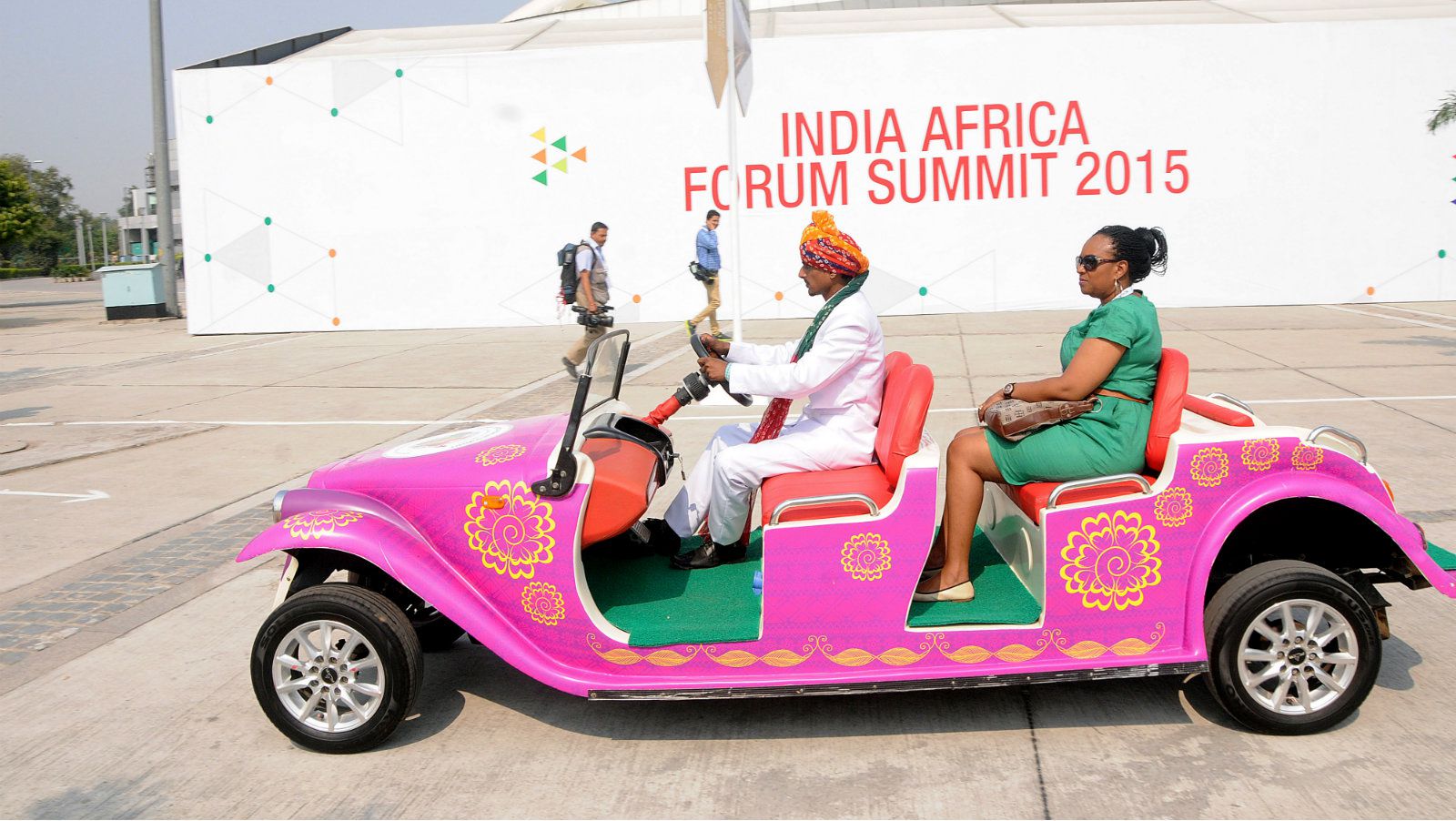
 This week, New Delhi invited leaders from all 54 African nations to the biggest-ever India-Africa summit.
The heartbeat of 1.25 billion Indians and 1.25 billion Africans are in rhythm, Narendra Modi said at a lavish session, which included dancers and drummers on Thursday (Oct. 29). The Indian prime minister and his African counterparts discussed trade, investments, our common goals and history with Africa.
But one topic was conspicuously missing from the entire jamboree—India’s deeply ingrained racism towards Africans.
Last year, the issue became a political hot potato in India after a politician from the Aam Aadmi Party allegedly misbehaved with a number of African women living in Khirkee Extension—a neighbourhood in south Delhi.
But Indian racism against Africans isn’t that new.
The emerging Indian economy has been attractive to people from the first world and developing nations alike. In Delhi alone, the number of expats has doubled in the last five years, and this includes people from African nations.
A large part of this number come to India for higher education. There are an estimated 30,000 African students currently studying in India. In Khirkee alone—where I have worked for the past decade—I have met people from the Ivory Coast, the Democratic Republic of the Congo (DRC), Nigeria, Somalia and Uganda. But despite their large numbers, India has not been a hospitable country for them.
Cases of violence against people from African countries have been reported from other cosmopolitan places like Bengaluru, Goa, and even Ludhiana. But it is not just regular people who discriminate against dark-skinned expats—government support is missing, and even the police is equally insensitive.
We board the metro from Badarpur, the neighbourhood from where the Delhi metro’s violet line begins. This is March of 2015, the end of Delhi’s brutal winter.
My American friend, her father and I enter the first coach of the train. In the middle of an animated debate, we do not realise that we are seated in the compartment reserved only for the ladies.
Two stations later, 30 CISF men and women storm the compartment, allegedly clearing the coach of men who may be sitting in the women-only compartment. The Central Industrial Security Force, or CISF, is the police that guard the Delhi metro.
At that point, there were two men in the compartment: my friend’s father and an African man.
Read more at www.qz.com