Kyle Lydell Canty
Is it time for Black people to consider leaving America? In light of the increased violence facing Black bodies, and the threat of death facing Black children, women and men at the hands of law enforcement, could this become a new trend?
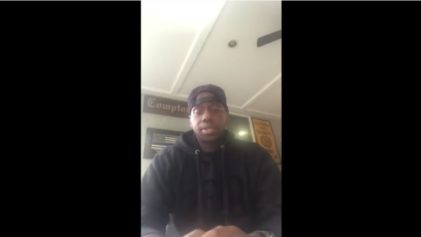
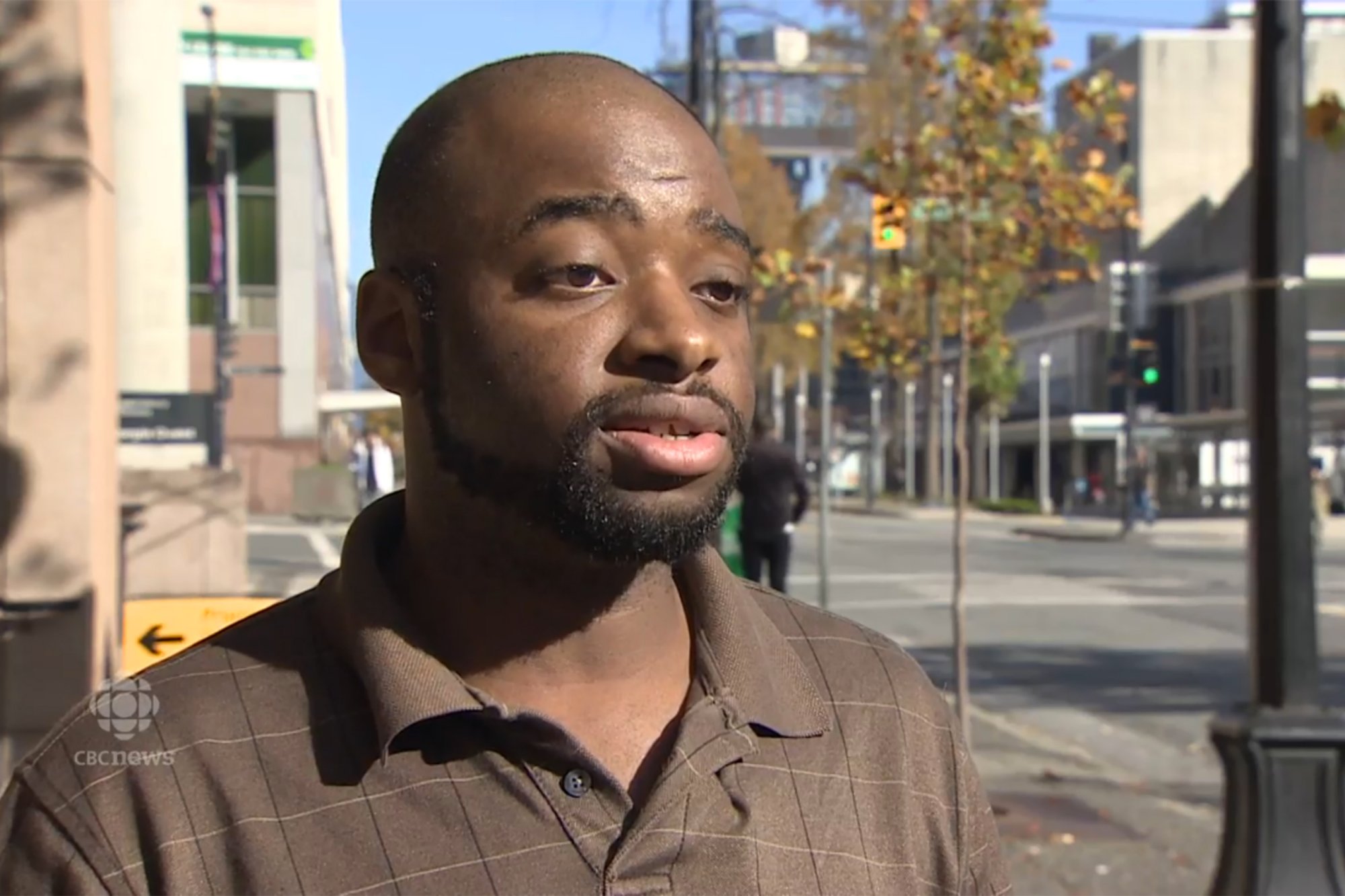
A Black man who is a U.S. citizen has fled to Canada seeking asylum because he fears police will kill him after seeing so many unarmed Black men gunned down in America. Kyle Lydell Canty, 30, went to Vancouver saying he was visiting, as Yahoo News reports, then filed for a refugee claim after arriving.
According to CBC, Canty told an Immigration and Refugee Board (IRB) hearing on October 23 that he was in fear of his life because he’s Black.
“This is a well-rounded fear,” he said, noting the cases of Michael Brown in Ferguson and Eric Garner in New York City, both of whom died at the hands of police. He said that Black people in the U.S. are “being exterminated at an alarming rate.” Canty has lived in six states and has been harassed and targeted by police because of his race in each one, according to Your Black World.
“I got bothered because I’m Black,” said Canty, who represented himself at the hearing and is presently living in a Vancouver homeless shelter. “This is a history of false arrest. My name is ruined because of the false arrest.”
The IRB reportedly commended Canty for presenting a strong case on his behalf. Nevertheless, he faces a challenge, as only a handful of U.S. citizens are granted asylum in Canada each year. Further, the IRB has ruled in a decision that Americans seeking asylum are not in need of protection, nor are they conventional refugees under UN standards. During the Vietnam War, Canada welcomed tens of thousands of draft dodgers from its neighbor to the South. And while around 200 war resisters fled the U.S. to Canada during the Iraq War, they were rejected.
However, the notion that Black people in the bowels of America are refugees in need of protection is not a far-fetched one. In the Washington Post, Aha Jorjani, an immigration defense lawyer with the Office of the Alameda County Public Defender, argued that African-Americans would qualify for asylum if they were seeking refuge from another country. Further, she said a good case could be made without the need to go back to the history of slavery, Jim Crow segregation and lynching for evidence, but rather by focusing on the racial profiling, unjust imprisonment and mass incarceration of Black people occurring today.
Black folks have been down this road before, as our history in America has been one of escaping to freedom. During slavery, as many as 100,000 people of African descent escaped bondage in the South through the Underground Railroad, a network of Black and white people providing shelter and safe havens to enslaved Africans who were fleeing to the North. According to CBC, 30,000 Black people escaped to Canada.
Why did they flee? Slavery was a life of kidnap, torture, rape, starvation, deprivation and forced labor. Black people had to control over their lives or their family, as the master could beat or sell them at will. Banned by law from receiving an education, making a living or controlling one’s actions and whereabouts, African people under U.S. slavery were captives of the plantation police state, in which the slave patrols terrorized Black people with a constant threat of punishment or execution.
During Jim Crow, the Great Migration occurred, an exodus of 6 million African-Americans from the rural South to the Northeast, Midwest and West between 1915 and 1970. In the South, plantation slavery remained under a different name, with oppressive economic conditions and a system of sharecropping. Lynch mob violence and Ku Klux Klan domestic terrorism threatened Southern Black people, who were barred from voting, and subject to an unjust legal system and unequal, inferior education. This exodus created massive demographic shifts in the U.S., and changed the political and cultural life of the nation. Northern cities saw their African-American populations soar, leading to the emergence of the Harlem Renaissance, and a doubling of Blacks employed in industrial jobs.
So, Black folks have done it before, but is it time to do it again—this time not fleeing the South, but escaping from the U.S. altogether to somewhere else?