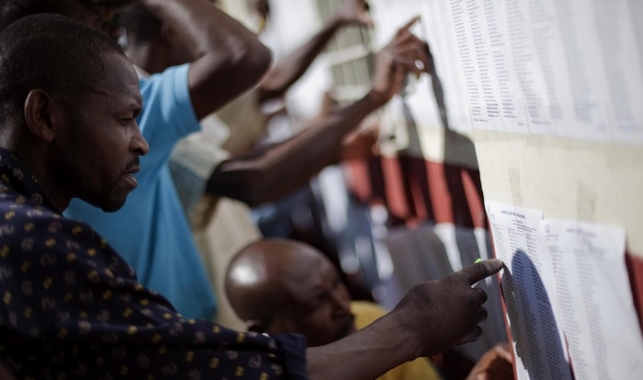
 With Haiti’s plethora of presidential candidates, polls show some aspirants rising to the top, though the frontrunner remains unclear. Two polls give different results of voters’ first choice among 54 candidates. The likeliest scenario? No candidate will get more than 50 percent of the vote on Election Day, October 25, and a runoff will take place December 27.
The election marks a second run for president by Jude Célestin of the Alternative League for Progress and Haitian Emancipation party, or LAPEH. Célestin ran in 2011 under the Unity Party of then-President René Préval, but dropped out when the Organization of American States contested the first-round of voting results, which originally put Célestin ahead of Michel Martelly, who eventually became president. With a Swiss education in mechanical engineering, Célestin took a job in the government’s road construction agency in 1997, becoming director in 2006 under Préval. Célestin is running on a campaign platform to boost job creation and fight government corruption. He has also voiced support for harmonious relations with the Dominican Republic.
Jovenel Moïse is the presidential candidate representing the current ruling Haitian Tèt Kale Party, or PHTK. Moïse is promising to further the Martelly administration’s efforts on education and tourism. As head of Agritrans, Haiti’s first agricultural free zone dedicated to exporting bananas, Moïse is also a proponent of creating jobs and increasing exports through the agricultural sector. “In terms of arable land, we have nothing to envy of other producers at the level of the Caribbean,” he said. This summer, Haiti’s Departmental Electoral Office of Litigation (BCED) considered accusations that Moïse used a portion of Agritrans funds to finance his electoral campaign, but ultimately approved his candidacy in June. The presidential bid is Moïse’s first political race.
Presidential candidate and former Senator Moïse Jean-Charles has long been one of the Martelly government’s most vocal critics. He first entered the Senate in 2009 as a representative of the country’s North department, where he served on the Foreign Affairs, Natural Resources and Rural Development, Finance, and Agricultural committees. He also won three terms as Milot mayor from 1994 to 2004. Though Jean-Charles represents the Pitit Desalin party, he was a mayor under the banner of Fanmi Lavalas—the party of Haiti’s first democratically elected president, Jean-Bertrand Aristide.
Read more at as-coa.org