Mary Church Terrell
Early Years
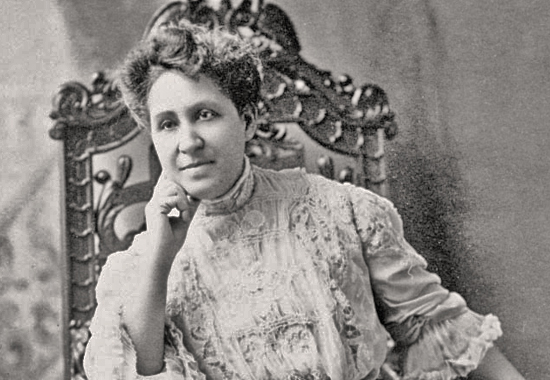
Mary Church Terrell was born in Memphis in September of 1863, to former slaves, Robert Church and Luisa Ayers. Her mother was a hair salon operator and her father was a successful businessman.
Education
Terrell earned a bachelor of arts in classical languages from Oberlin College in 1884. Four years later, she received her master’s degree in education from Oberlin. Upon graduating from Oberlin, she taught at Wilberforce College in Ohio then began teaching at M Street Colored High School (now Dunbar High School) in Washington D.C.
Terrell was the first African-American woman to serve on the Washington D.C. school board from 1895 to 1901.
Her Activism
Hearing about a close friend’s lynching in 1892, propelled Terrell into social activism. She, along with Frederick Douglass, appealed to Present Benjamin Harrison, and when that failed to produce public disapproval of lynching, Terrell formed the Colored Women’s League in Washington to address social problems facing Black communities. In 1909, Terrell signed the charter that established the National Association for the Advancement for Colored People (NAACP).
In the 1920s, Mary Church Terrell worked with the Republican National Committee named Terrell on behalf of women and African-Americans.
Women’s Suffrage
In 1896, she founded the National Association of Colored Women (NACW) and used her position as president to advance social and educational reforms.
In her 1902 essay, “Responsibilities of Educated African American Women” Terrell explains their purpose and intent with the NACW.
“In every way possible we are calling attention to the barbarity of the convict lease system, of which Negroes and especially the female prisoners are the principal victims, with the hope that the conscience of the country may be touched and this stain on its escutcheon be forever wiped away,” she wrote.
Although Terrell was a leader within the Black women’s suffrage movement, she also worked with the National Women’s Party. Terrell helped the National Women’s Party by picketing at the White House for women’s rights. She was invited by Susan B. Anthony to address the National American Woman Suffrage Association on the “Progress and Problems of Colored Women.”
A few years later she spoke again, this time without regard to race, on “The Justice of Woman Suffrage.” Her main focus was securing women’s right to vote.
Author and a Lecturer
In 1904, Terrell spoke at the Berlin International Congress of Women. According to Spartacus Educational, she made a great impression when she gave her speech in German, French and English. She became a professional lecturer for Slayton Lyceum Bureau and traveled throughout the south and east speaking of the achievements of African-American women and advocating for justice and education for African- Americans and people of color around the world.
Her autobiography, A Colored Woman in a White World was published in 1940.
“I cannot help wondering sometimes what I might have become and might have done if I had lived in a country which had not circumscribed and handicapped me on account of my race, but had allowed me to reach any height I was able to attain,” she wrote.