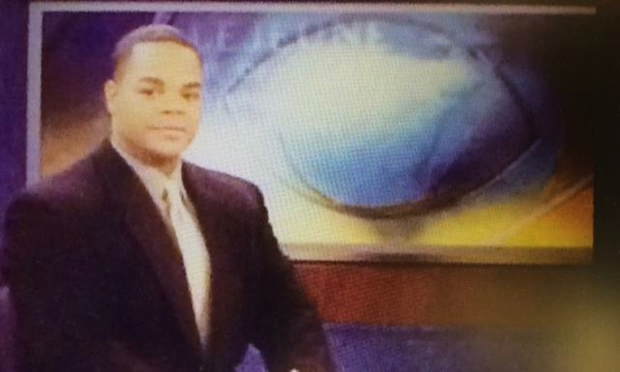
Virginia shooter Vester Lee Flanagan.
Black journalists in Roanoke, Va. said they were threatened in the wake of the on-air slaying of news reporter Allison Parker and cameraman Adam Ward, according to Richard Prince’s Journalisms column.
Parker and Ward, who were both white, were killed by former co-worker Vester Lee Flanagan. Flanagan, who was known on air as Bryce Williams, complained of the discrimination he faced in the workplace as a gay, Black man and had been fired from several jobs. He was fired from WDBJ-TV for being a difficult employee and making threatening gestures to his co workers.
Flanagan had carefully planned the murders. He left a rambling 23-page manifesto and also cleaned up his apartment before committing the crime. Flanagan said he also wanted to strike back at white people after Dylann Roof’s massacre of nine Black churchgoers in Charleston. After the shooting, Flanagan was pursued by police before turning the gun on himself. He later died in hospital.
Kelly Zuber, WBDJ TV news director, said a reporter from her station and a reporter from WSLS-TV said they were threatened by a white man, who used his hand to make the shape of a gun, while on assignment. The WSLS-TV reporter wrote down the man’s license plate and WDBJ secured a restraining order against him. Journalisms said the reporter declined to discuss the incident in detail.
However Zuber said that was not the only incident the station faced.
“We continue to get threats to our newsroom,” said Zuber at a meeting of the Radio Television Digital News Association, Society of Professional Journalists and National Association of Hispanic Journalists.
Zuber added one threat against a Black reporter, who recently joined the station, was
“as racist as you could possibly get.”
Flanagan also recorded the attack and uploaded the footage to social media. Zuber was concerned it would give other disturbed people ideas.
WDBJ was forced to take on several new security precautions after the murders. They no longer announce where they are going to be sending reporters and banned outside reporters from the newsroom.
“The newsroom was our sanctuary, the place where we could hold each other and cry,” Zuber said.