7 Facts About Marcus Garvey’s Friend, Duse Mohamad Ali You May Not Know

african-times-cover

Ali Establishes Career  in Acting and Journalism

By the 1900s, Ali established himself as a actor and playwright, producing his original plays, The Jew’s Revenge (1903), A Daughter of Judah (1906), A Cleopatra Night (1907) and Lily of Bermuda (1909). However, this time was the beginning of his foray into journalism and politics. In 1912, The African Times and Orient Review was created by Ali and funded by West Africans who agreed with his political leanings. The publication, which covered issues in the United States, the Caribbean, West Africa, South Africa and Egyptm was the first Black-owned newspaper in England. It eventually attracted the attention of people like Booker T. Washington, W.E.B. Du Bois and Alain Locke.
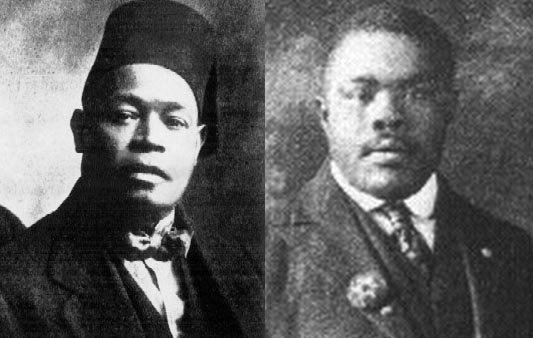
 

duse-ali-marcus-garveyAli and Marcus Garvey

The African Times and Orient Review also attracted a young Marcus Garvey, who was studying in London at the time. In 1913, the two worked together writing articles about English colonization and Ali served as a mentor to Garvey, shaping some of his world views. The English shut down the paper because they feared it would incite a revolution, preventing the distribution of the paper to India and Africa in 1918. However, in 1920, Ali restarted the paper after WWI and renamed it,  African and Orient Review. 
Democracy needs journalism it can trust.

This election season, the stakes are higher than usual — and so is the pressure on newsrooms to soften their coverage, stay quiet, or just disappear. Independent reporting, the kind that answers to readers instead of advertisers or political pressure, matters more in a moment like this, not less.

For over 14 years, Atlanta Black Star has stayed independent and reader-funded. We have no corporate owner and no shareholders telling us what to cover or how to cover it. That independence is also our biggest vulnerability: nothing protects it except readers choosing to fund it directly.

Newspaper ad revenue has fallen more than 80% since 2005, and local newsrooms are closing at a rate of roughly two a week nationwide. When outlets go under in a moment like this, it's rarely the independent, reader-funded ones that get to stick around.

We know a request for support isn't why you came here. But without readers choosing to fund this work directly, the depth of reporting we can do at home and abroad shrinks along with everyone else's. If you're not in a position to give, that doesn't change how much we value you as a reader.

If you are able to, a recurring contribution does more for us than a single one-time gift, because it lets us plan the next investigation instead of just the next invoice. It takes about 30 seconds, no long form, no account. Thank you for continuing to support independent journalism and freedom of the press.

Back to top