Huffingtonpost.com
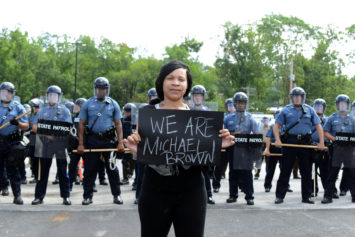
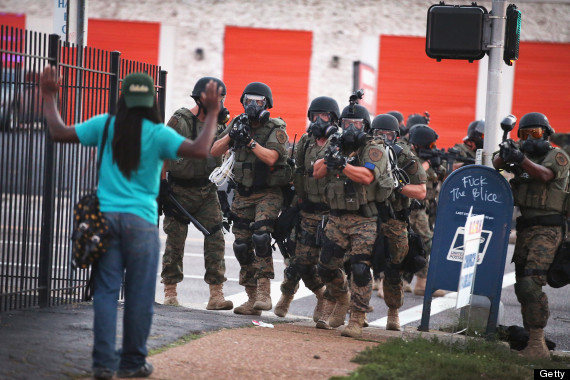
The Ferguson Commission, set up by Missouri Gov. Jay Nixon after the riots following Michael Brown’s death, has found widespread disparities in the local criminal justice system, according to media reports.
The 16-person board found several examples of institutionalized racism in the St. Louis area.
“We have not moved beyond race,” the report, titled Forward Through Ferguson: A Path Toward Racial Equity, said. “St. Louis does not have a proud history on this topic, and we are still suffering the consequences of decisions made by our predecessors.”
The commission’s report had 189 recommendations, including changes to the education system, improved policing, and enhancing social services and Medicare.
The report also made several recommendations for changing law enforcement such as:
- Recommending bringing in the Missouri state attorney general to prosecute police-related killings
- Using a database to keep track of police-related killings around the state
- Creating review boards for county and municipal police forces
- Treating non-violent offenses as civil violations
- Improving police officer training in regards to handling riots and dealing with minority communities
In an interview with St Louis on the Air, Ferguson Commissioner Dan Isom said Missouri needs to improve policing standards.
“If we look at ourselves in comparison to other states, we’re behind the curve on police professionalism, accountability and oversight on the state level,” Isom, who is a former St. Louis police chief, said. “The reality is we’re going to have to make the case that this is important for our community. It’s important just on a human level for this. But it’s also important for the success for our region and our state.”
Although Nixon praised the report, many others were skeptical about how many of the recommendations would be implemented. According to NPR, the commission, which held public hearings for nine months, does not have the power to implement changes. That has to come through the Missouri legislature which is controlled by Republicans, who would be hostile to suggestions such as raising the minimum wage and expanding Medicaid. Lt Gov. Peter Kinder, a Republican, said it was all too easy to put the report findings away and never implement any of the suggested changes.
“I certainly hope that it will not be another commission report that gathers dust. But it was reasonable, I think, at the outset of this to have that suspicion,” Kinder said.
St. Louis County Prosecutor Bob McCulloch was extremely critical of the report’s suggestion of bringing in special prosecutors to oversee cases involving police killings.
“We elect prosecutors in the state of Missouri. And we elect them to do the job, and that includes investigating and prosecuting every case within that jurisdiction,” McCulloch said. “And if you don’t trust the prosecutor to do that, then don’t elect them. Or throw them out at the next election when it comes.”
McCulloch faced national condemnation for his failure to indict Officer Darren Wilson who killed Michael Brown. Critics said that at times he sounded like Wilson’s defense lawyer. According to NPR, Nixon, who faced widespread criticism of his handling of the riots, said he would spend his last year in office pushing to implement many of the commission’s recommendations.
“I do think that the splinter point was whether or not, with what happened last summer and into the fall, whether as a state we were going to back up and say problems don’t exist and we’re going to ignore them,” Nixon said, “or whether we’re going to lean forward and work together to move our state forward.”