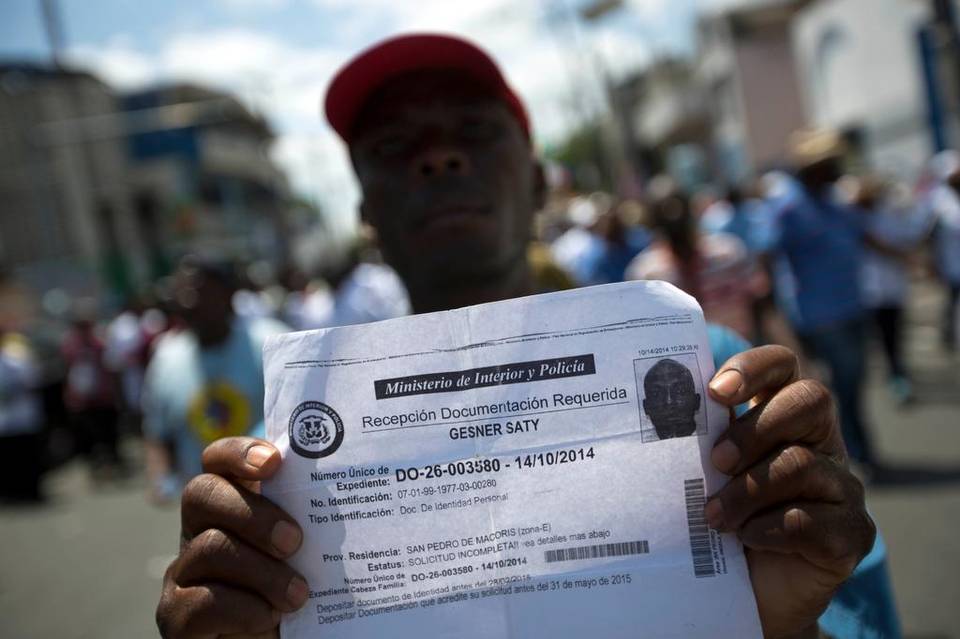
 As Haiti and the Dominican Republic remain at an impasse over a brewing migration crisis, the head of a hemispheric mission that recently visited the island both nations share, is reiterating calls for the governments to talk.
“It’s essential,” Francisco Guerrero, secretary for political Affairs for the Organization of American States, told the Miami Herald. “One of the main goals of the OAS at this point is that the dialogue between the two countries gets increased in its quality.”
In a report about the migration crisis to OAS Secretary General Luis Almagro, Guerrero and others outlined several observations and recommendations to help smooth relations between the nations that share the island of Hispaniola. Among them: for the OAS to serve as mediator.
“If you have this bi-national dialogue between the two countries, it could be easier to … have a common understanding of what’s happening in that situation,” he said. “Each country has a point of view of what’s happening.”
Dialogue, Guerrero said also would help determine, for example, how many have actually crossed into Haiti since the crisis picked up steam in mid-June after a deadline for enforcement of a new Dominican immigration law expired.
The new law, the Dominican government said, was needed to address illegal migration from Haiti. In 2013, the country’s highest court stripped citizenship away from the Dominican-born children of Haitian migrants, dating back to 1929. That decision, which has left thousands stateless, triggered international outcry with Haitians and human rights activists accusing the Dominican government of racism. In response to the criticism, the Dominican government introduced a plan for individuals to reclaim citizenship, but few applied. It also introduced a registration plan for undocumented workers to legalize their status in the country.
A 45-day moratorium for undocumented workers who applied for the so-called “regularization” plan but lacked all the paperwork, expired on April 1, raising new concerns about more arrivals.
“We are watching to see what happens,” Haitian Foreign Minister Lener Renauld told the Miami Herald.
Renauld welcomed the OAS report. Dominican authorities, however, said the government “has not requested nor requires the intervention of the General Secretariat of the OAS.”
“There is no currently existing conflict between the two nations that may warrant the need for said mediation,” the government said. “The descriptive part of the report presents clear evidence that the accusations voiced in recent weeks against the Dominican Republic are false and unfounded, specifically those referring to a humanitarian crisis and alleged systematic violations of human rights that do not exist.”
Bilateral dialogue between the two nations would be “reestablished as soon as the Haitian government moves away from its attitude of discrediting the Dominican Republic, as a means of evading its responsibility with the people of Haiti,” it said.
Santiago Canton, head of the Partners for Human Rights Program for the Robert F. Kennedy Center for Justice and Human Rights, said the OAS must follow up.
Read more at miamiherald.com