8 Mixed-Race People With Black Blood Who Experienced Rejection From Their Other Side

Halle Berry

Halle Berry

Born to a white mother and a Black father, actress Halle Berry experienced countless instances characterized by racism during her childhood in Ohio. When her father, Jerome Berry, walked out, her mother moved her daughters, Halle and Heidi, to Bedford, Ohio, where Berry was “subjected to discrimination at an early age,” according to biography.com. Yet, she “overcame Hollywood’s racial barriers when she was cast as the first African American to play the Queen of Sheba, in the Showtime movie Solomon & Sheba.” In addition, Berry won the Academy Award for Best Actress for her role in Monster’s Ball. During her speech, she “acknowledged the honor of becoming the first African-American woman to win the Oscar for Best Actress by thanking all the performers who came before her.”
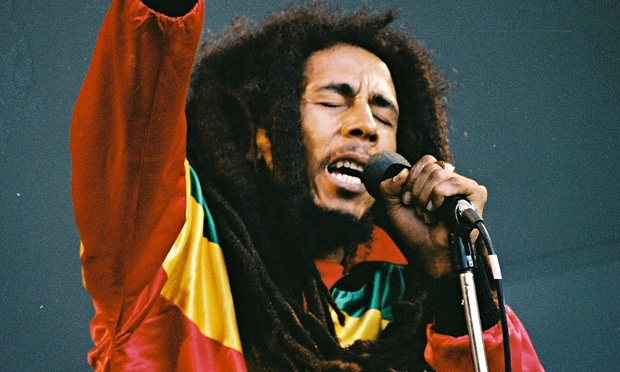
 

Photograph: Peter Still/Redferns

Photograph: Peter Still/Redferns

Bob Marley

Reggae star Robert Nesta “Bob” Marley and his father, Norval Sinclair Marley, a white Jamaican, had a troubled relationship. In his book, Bob Marley, Stephen Davis explains that Norval Marley’s family, his mother in particular, pressured him to abandon his new family, which consisted of his wife, Cedella, an African-Jamaican, and their newborn son, Bob. As a result, Norval moved away, and his visits were inconsistent and then, one day, nonexistent. The absence of his father inspired the meaning behind many of Bob Marley’s songs.


Democracy needs journalism it can trust.

This election season, the stakes are higher than usual — and so is the pressure on newsrooms to soften their coverage, stay quiet, or just disappear. Independent reporting, the kind that answers to readers instead of advertisers or political pressure, matters more in a moment like this, not less.

For over 14 years, Atlanta Black Star has stayed independent and reader-funded. We have no corporate owner and no shareholders telling us what to cover or how to cover it. That independence is also our biggest vulnerability: nothing protects it except readers choosing to fund it directly.

Newspaper ad revenue has fallen more than 80% since 2005, and local newsrooms are closing at a rate of roughly two a week nationwide. When outlets go under in a moment like this, it's rarely the independent, reader-funded ones that get to stick around.

We know a request for support isn't why you came here. But without readers choosing to fund this work directly, the depth of reporting we can do at home and abroad shrinks along with everyone else's. If you're not in a position to give, that doesn't change how much we value you as a reader.

If you are able to, a recurring contribution does more for us than a single one-time gift, because it lets us plan the next investigation instead of just the next invoice. It takes about 30 seconds, no long form, no account. Thank you for continuing to support independent journalism and freedom of the press.

Back to top