 By Manny Otiko
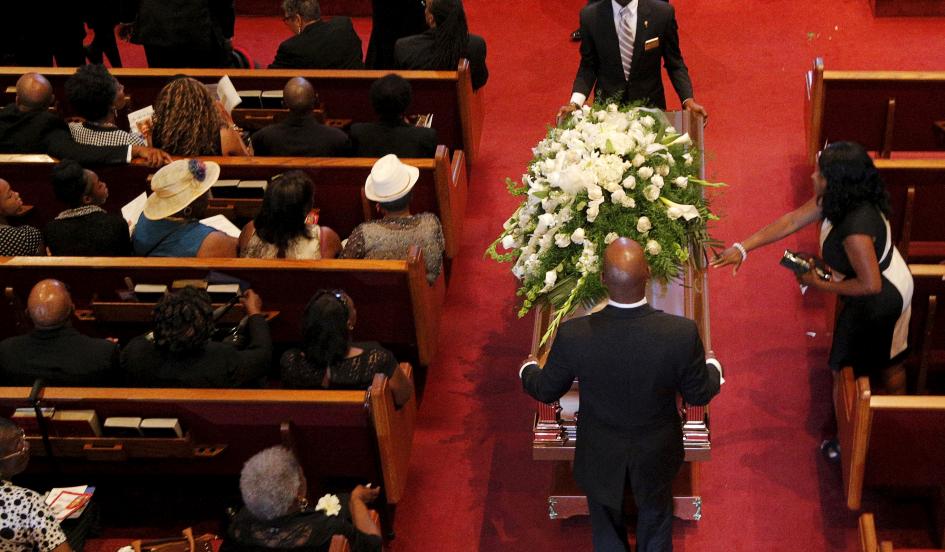
Charleston, S.C. residents have begun a sad ritual, with the first funerals of the nine churchgoers slain in a shooting by white supremacist Dylann Roof taking place. The first two funerals were for Ethel Lee Lance, 70, and Sharonda Coleman-Singleton, 45, according to the BBC. Lane’s funeral service was a festival of music, dancing, singing and tears.
“People stood to clap, nod and sway—some closing their eyes under the exertion of the cathartic singing. Ushers walked through the aisles with boxes of tissues for people to dab their tears. An organ, drums and bass guitar provided the rhythm,” reported the Associated Press.
Lance worked for Emanuel AME church for 30 years and was known for her infectious smile.
Coleman-Singleton’s funeral attracted several state and national political figures such as South Carolina governor Nikki Haley, Charleston Mayor Joseph P. Riley, Jr., Rev. Jesse Jackson and Rev. Al Sharpton. The funeral was also attended by more than 100 members of Coleman-Singleton’s sorority, Alpha Kappa Alpha, who dressed in white.
Riley said he hoped the tragedy would be a catalyst for change.
“A hateful, disillusioned young man came into the church filled with hate… and the reaction was love,” Riley said. “He came in with symbols of division. The Confederate battle flag is coming down off our state capitol.”
Sharpton said on the morning of the shooting he watched Loretta Lynch being sworn in as the first African American woman attorney general. Then later in the day he watched news reports of Black people being killed because of their skin color.
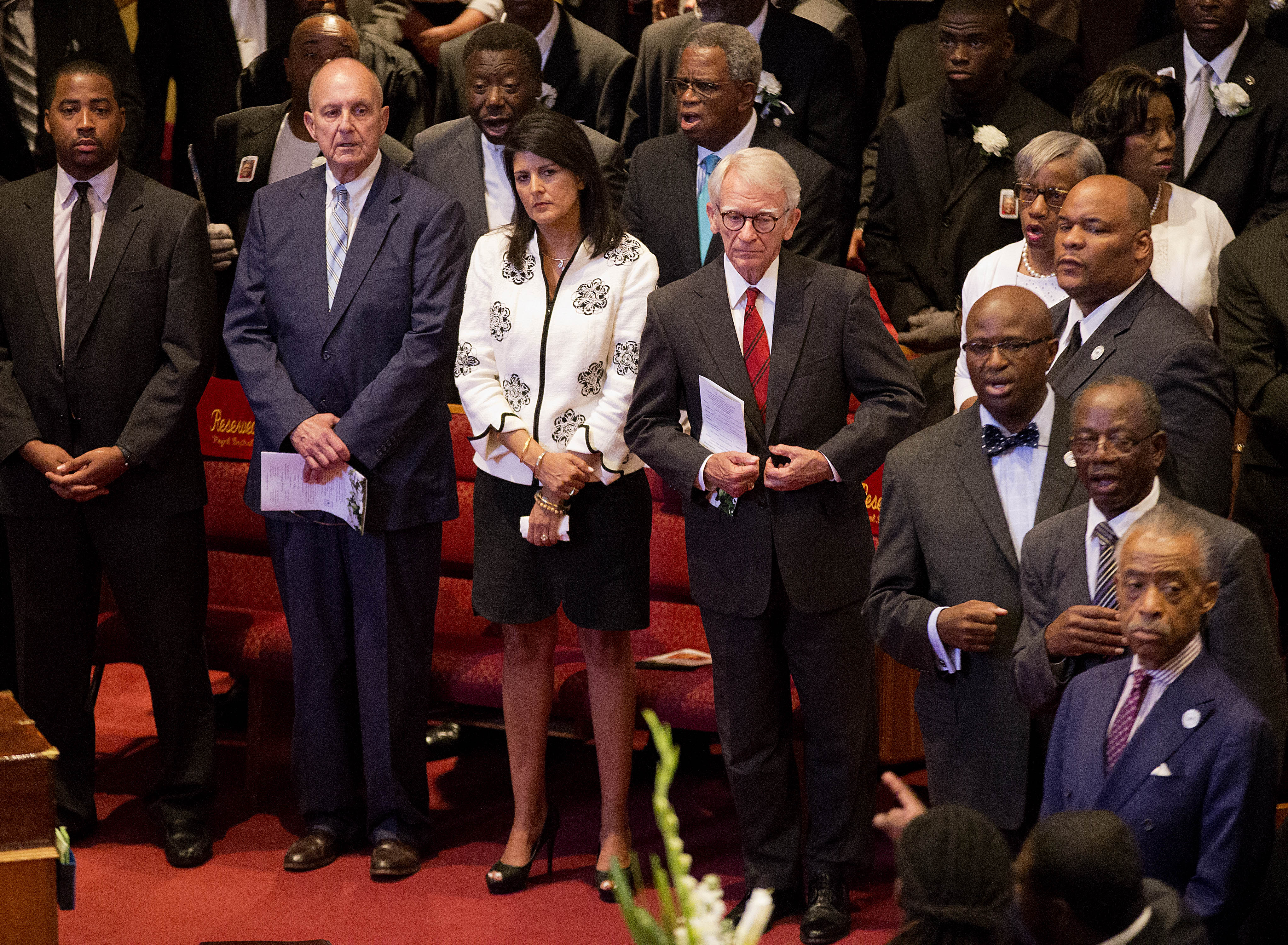 “That morning, I saw how far we have come,” Sharpton said. “That night, I saw how far yet we have to go.”
The AP also reported security was tight at both funerals with police standing guard and checking bags before allowing people in.
President Barack Obama and Vice President Joe Biden are expected to arrive in Charleston today to speak at the funeral of State Senator Clementa Pinckney, who was also the church’s head pastor. Politicians from both parties will attend the funeral.
A bipartisan congressional delegation is making the journey to Charleston as well, including House Speaker John Boehner, R-Ohio. USA Today reported that Boehner said lawmakers want to “pay our respects to the families of the victims and express the condolences of the American people.”
The Charleston massacre has led to political change and soul-searching from white Southerners, who still seem enamored with the Confederate flag. Some Southerners still seem hell bent on retaining the flag, claiming it’s a symbol of Southern pride. But some legislators have realized the flag is too toxic to be associated with. Roof was pictured posing with the rebel battle flag and also had the flag on his license plate.
The gunman may have hoped to spark a race war with his terrorist act, but his actions had the opposite effect. Several retailers have announced they will no longer sell the flag. And across Southern states, politicians are making moves to remove the rebel battle flag from state capitols, government buildings and state flags.
“(Nikki) Haley started the groundswell against Confederate icons Monday by successfully calling on South Carolina lawmakers to debate taking down the Confederate battle flag flying in front of the Statehouse. Then Alabama Gov. Robert Bentley, also a conservative Republican, brought down four secessionist flags at the Capitol in Montgomery, Ala.,” said the AP.
Although Charleston seems to be embracing the same spirit of reconciliation shown by the victims’ family members who spoke at Roof’s bond hearing, there is still racial tension under the surface, as Black churches in Georgia and North Carolina have recently been targets of arson attacks.